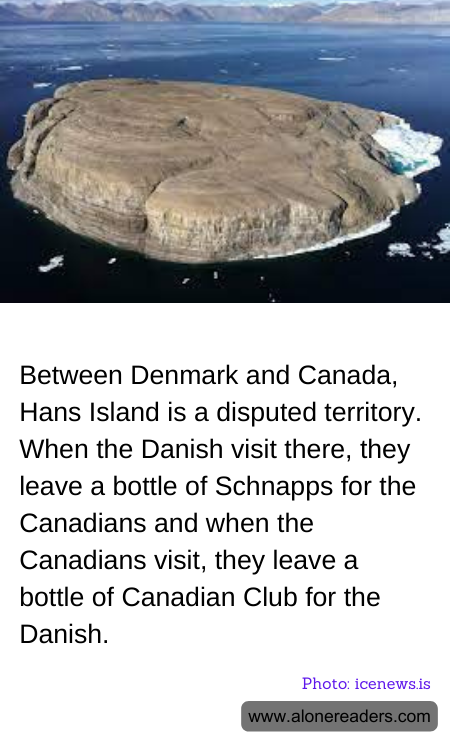
Hans Island, a small, uninhabited knoll located precisely in the middle of the Nares Strait—which serves as the maritime boundary between Greenland and Canada—has been the subject of an amiable, though protracted, territorial dispute between Denmark and Canada. This quarrel, however, stands out from other international disputes due to its notably cordial nature, symbolized by a tradition involving bottles of alcohol.
This tiny piece of rock, only 1.3 square kilometers in area, has been a point of contention since the early 1970s, when the border between Greenland and Canada was drawn but left Hans Island as an overlooked detail. Neither country could agree on the ownership of this seemingly insignificant land. However, despite what could have been grounds for a strained relationship, the dispute over Hans Island has been handled with a unique approach filled with goodwill.
The tradition begins when a military or governmental group from either Denmark or Canada visits the island. If the visiting party is Danish, they leave behind a bottle of Schnapps, a traditional Scandinavian spirit. Conversely, when Canadians visit, they leave a bottle of Canadian Club, a renowned Canadian whisky. Each party also typically plants its national flag on the island. This tradition has not only served to maintain a friendly atmosphere around the negotiations but has also symbolized the mutual respect and light-hearted handling of the dispute by both parties.
The practice brings a human element to the geopolitical discussions, underscoring the ways countries can interact with humor and camaraderie, even in contexts of disagreement. Over the years, this unique form of diplomacy has gained Hans Island the nickname "the world’s most peaceful battlefield."
While recent talks between Canada and Denmark suggest that a resolution may soon formalize the island's sovereignty, perhaps shared, the friendly exchanges on Hans Island offer a refreshing example of how international disputes do not always have to provoke animosity or conflict. Instead, they can foster a spirit of cooperation and even friendship, serving as a reminder of the common bonds humans share, regardless of national boundaries.
