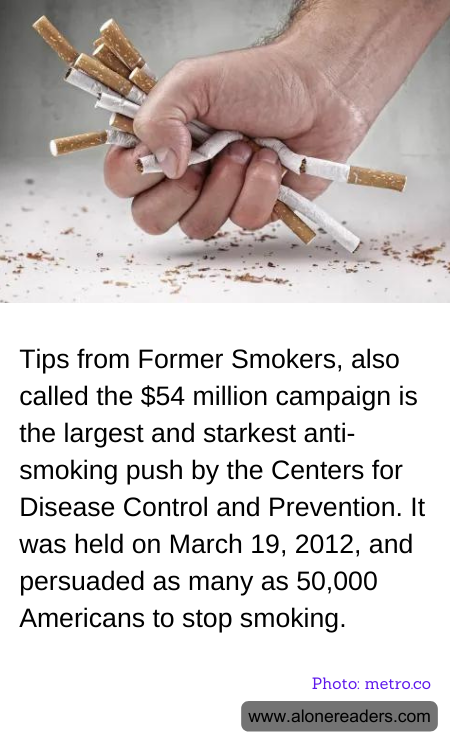
In 2012, the Centers for Disease Control and Prevention (CDC) launched an unprecedented anti-smoking initiative known as Tips from Former Smokers, a campaign that not only highlighted the dangers of smoking but did so through the powerful testimonies of individuals who had suffered devastating health consequences from their tobacco use. With a substantial budget of $54 million, the campaign marked the largest and most stark anti-smoking push by the CDC to date. It debuted on March 19, 2012, and quickly gained national attention for its raw, unfiltered portrayal of the ravages of smoking.
The campaign featured a series of advertisements that provided a sobering look at the real-life implications of smoking. These ads showcased former smokers who had experienced severe medical conditions, such as throat cancer, heart disease, and stroke, directly resulting from their smoking habits. The participants shared their personal stories in a bid to warn others about the dangers of smoking and to encourage smokers to quit.
The effectiveness of the campaign was significant. According to reports, Tips from Former Smokers led to an estimated 50,000 Americans quitting smoking, surpassing expectations and demonstrating the power of personal testimony in public health campaigns. The campaign utilized various media outlets, including television, radio, print, and online platforms, to ensure widespread reach and engagement. This multi-channel approach helped to maximize the impact of the campaign, making the anti-smoking message unavoidable for many, particularly those within high-risk demographics.
The CDC's investment in this campaign also provided momentum for ongoing anti-smoking efforts nationwide. It set a precedent for future public health campaigns, illustrating that graphic and emotional appeals could effectively motivate behavior change. The success of Tips from Former Smokers also underlined the importance of investing in prevention and encouraged other health organizations to adopt similar strategies in their fight against tobacco.
Overall, the Tips from Former Smokers campaign serves as a powerful example of how well-executed public health initiatives can lead to significant behavioral changes and positively impact public health. It demonstrated the critical role of storytelling and personal experience in shaping public perceptions and behaviors around smoking, offering a model that could be replicated in other areas of public health advocacy.
