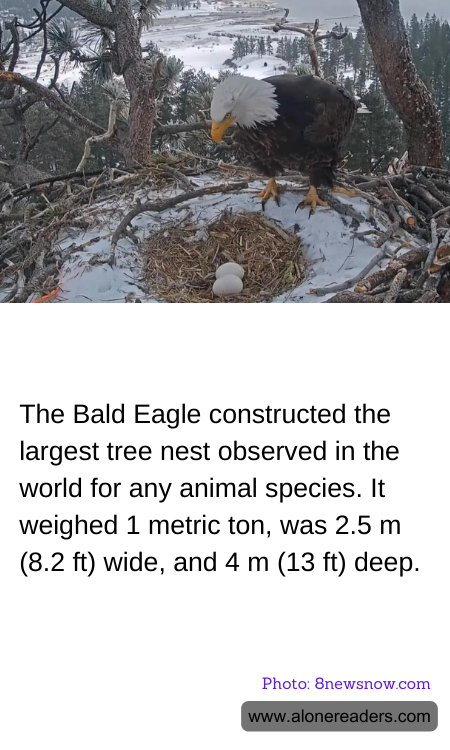
The Bald Eagle, a symbol of majesty and strength in the avian world, holds a remarkable record in the animal kingdom for constructing the largest tree nest ever observed. This impressive architectural feat is not just a testament to the bird's size and power, but also to its dedication and skill in nest building. The record-setting nest was a massive structure, weighing over 1 metric ton. Such weight is comparable to a small car, a staggering fact considering it was all assembled by the birds themselves, using branches, sticks, and foliage.
The dimensions of this nest are equally impressive. Measuring 2.5 meters (8.2 feet) in width and 4 meters (13 feet) deep, the nest provided a secure and spacious environment for eaglet rearing. The size of the nest is crucial as it supports the growth of multiple eaglets, offering them the space needed to develop until they are ready to fledge.
Nest building is a rigorous process that involves both male and female Bald Eagles. They meticulously gather materials from their surroundings to construct these nests in large, sturdy trees or even on cliff edges. The location is strategic, offering safety from predators and a wide vantage point surrounding the territory. Typically, these nests are used and added to year after year, which is why some can grow extraordinarily large as more materials are continuously added.
The sheer size and weight of the nest highlight the bald eagle's engineering capabilities and their ability to adapt and thrive in various environments. This instance of extraordinary nest building not only provides insight into the behavior and life cycle of bald eagiles but also underscores the broader implications of habitat preservation. Large trees capable of supporting such massive structures are vital for the survival and proliferation of this iconic species. Thus, conservation efforts to preserve these natural habitats are essential, ensuring that Bald Eagles continue to soar high and grace the skies for future generations to witness.
