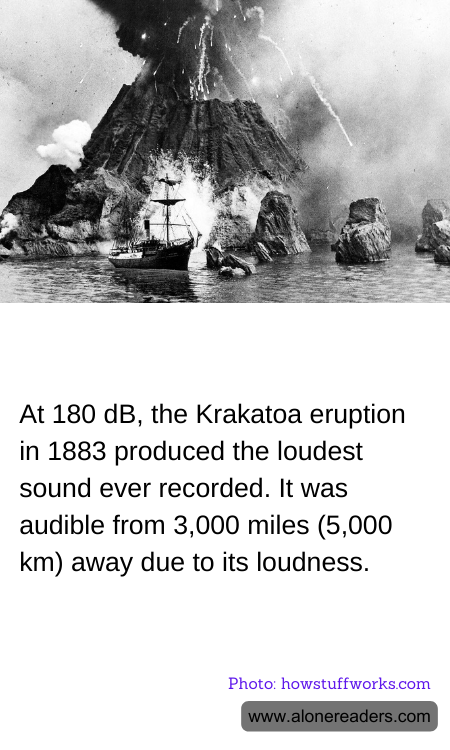
The 1883 eruption of Krakatoa is most notorious for producing the loudest sound in recorded history, estimated at about 180 decibels. This incredible level of noise is not just a figure of expression but a documented fact that underscores the sheer power of natural forces. The sound was so immensely powerful that it was heard as far away as 3,000 miles (5,000 kilometers), covering a distance that is roughly equivalent to traveling from the East to the West Coast of the United States.
Understanding the scale of this noise helps in grasifying not just the extent of the eruption, but also the impact it had on the surrounding environment and the global climate. The eruption caused seismic waves that circled the Earth multiple times and produced a series of tsunamis, the effects of which were devastating and far-reaching. The global climatic anomalies that followed the eruption were equally extraordinary, characterized by spectacular sunsets and a significant drop in global temperatures.
The enormous ash cloud ejected into the atmosphere contributed to these bizarre weather patterns, reflecting solar radiation and darkering skies thousands of miles from the eruption site. This massive amount of ash, combined with sulfur dioxide, created a veil of sulfuric acid mist around the Earth, which cooled the planet by reflecting sunlight away from the surface. Even today, scientists study the Krakatoa eruption to better understand the potential climatic impacts of large volcanic events.
In addition to its ecological and atmospheric consequences, the Krakatoa eruption left a lasting impact on the local geography. What was once a larger landmass became a group of smaller islands, with most of the original island of Krakatoa being submerged under the sea due to the collapse of the volcanic chamber.
This historical event highlights the dramatic and sometimes catastrophic role that volcanoes can play in shaping our world. The noise of the Krakatoa eruption, therefore, stands as a powerful testament not only to the immediate power of volcanic activity but also to its lasting influence on Earth’s landscapes and environments. The 1883 Krakatoa eruption is a reminder of how dynamic and ever-changing our planet is, driven by forces that operate on scales far beyond human control.
