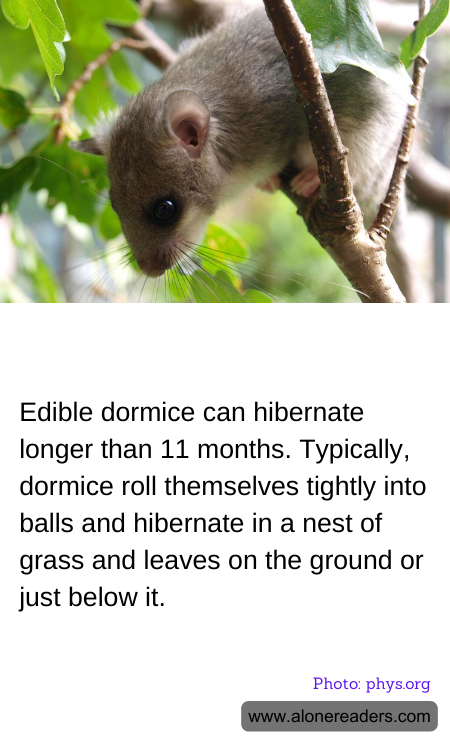
Edible dormice, also known by their scientific name Glis glis, exhibit one of the most remarkable hibernation periods among small mammals, often extending beyond 11 months in certain conditions. This extended hibernation is particularly advantageous as it allows these creatures to avoid harsh weather conditions and food scarcity during the winter months. In preparation for this dormant period, edible dormice accumulate substantial fat reserves in their bodies, which sustain them throughout the time when food is not readily available.
During hibernation, edible dormice exhibit a fascinating behavior in which they tightly roll themselves into balls. This posture helps minimize their surface area exposed to the cold, thus reducing heat loss and conserving energy. The choice of hibernation site is crucial for minimizing energy expenditure and maximizing protection from predators and environmental extremes. Typically, these dormice create or find a snug nest composed mainly of grass and leaves. Such nests are often located either on the ground or just below the surface, where temperature fluctuations are less pronounced and the dormice can remain relatively undisturbed.
The hibernation process in edible dormilies is not continuous; they may experience brief periods of wakefulness. During these times, they might adjust their position or even briefly venture out of their nests if the weather permits. However, these activities are relatively rare and they quickly return to their dormant state.
Understanding the hibernation behavior of edible dormice is not only intriguing from a biological and ecological perspective, but it also provides insights into the adaptations and survival strategies of small mammals. Further studies and observations can help elucidate how these animals manage physiological processes during long periods of reduced metabolic activity, which may have implications for broader scientific fields such as biomedicine and space travel. Through such research, we can learn how to better protect these unique creatures and their habitats, ensuring their survival for future generations.
