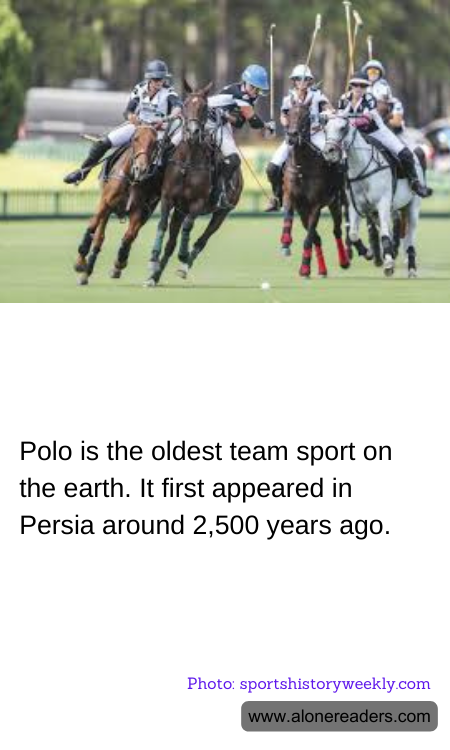
Originating over 2,500 years ago, polo is often hailed as the oldest team sport in the world. Initially developed in Persia (modern-day Iran), the game was not just a sport but also a pivotal training method for cavalry units, particularly the king’s guard or other elite troops. Played by nobility, it was known as the "Game of Kings." The name "polo" is derived from the Balti word "pulu," meaning ball.
Over the centuries, polo spread across Asia, picked up by the Byzantines and other empires, who adopted it as part of their military training. By the Middle Ages, it was well-established in the Indian subcontinent and had begun to make its way to the East, influencing other cultures along the way. The British cavalry officers stationed in India in the 19th century took a keen interest in the sport, and it wasn’t long before polo clubs popped up all over Britain and the western world, formalizing the rules and transforming it into the sport known today.
The game's primary objective in polo is to score goals against an opposing team. Players score by driving a small white plastic or wooden ball into the opposing team's goal using a long-handled mallet. Traditionally, polo is played on a large grass field up to 300 yards long, enhancing the spectacular and demanding nature of this high-speed sport. Despite its aristocratic roots, polo has evolved to be more inclusive and is played in over 80 countries worldwide.
Modern polo is not only a dynamic and strategic game but also a social event, often associated with luxury and class. The sport has embraced modernization while retaining its storied heritage, making it a beloved tradition among its followers. With international competitions like the Polo World Cup, it continues to captivate a global audience, proving that this ancient game still has much to offer in the realms of sport and culture.
