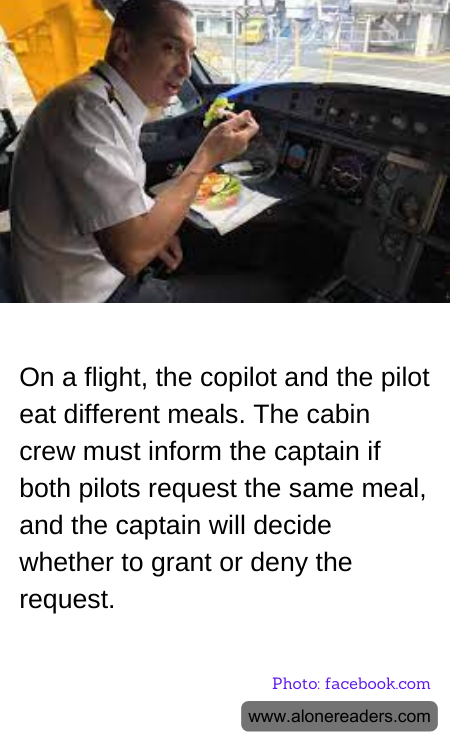
In the complex and carefully controlled world of aviation, safety procedures extend beyond the cockpit's high-tech instrumentation and into aspects as seemingly mundane as the in-flight meals consumed by pilots. It's a lesser-known rule that on a flight, the pilot and copilot are required to eat different meals. This policy is a preventative measure designed to reduce the risk of both pilots suffering from food poisoning or any form of food-borne illness simultaneously, which could potentially incapacitate the crew and create a critical safety risk.
Catering teams on flights prepare different meals for the flight deck to ensure this diversity. If, by chance, both the pilot and the copilot request the same meal, it is standard procedure for the cabin crew to notify the captain. The captain then has the prerogative to allow both to have the same meal or to enforce the original rule where they must have different meals. This decision may depend on factors like the length of the flight, the severity of the potential risk, or simply adherence to the strict safety protocols set by the airline.
Though it might seem like an unnecessary layer of caution, this policy is a key part of broader risk management strategies in aviation that prioritize absolute safety. By ensuring that pilots consume different meals, airlines mitigate the risk of simultaneous health issues among their most crucial crew members. Additionally, this rule underscores the tremendous responsibility that airline captains bear, not just in terms of flight operations but also in maintaining crew welfare and ensuring all possible precautions are taken.
The rule also serves to remind us of the numerous, often overlooked aspects of airline safety protocols that go beyond what passengers see. Every procedure, no matter how small it may seem, is established based on a backdrop of rigorous safety analyses and is aimed at safeguarding passenger and crew safety at all times.
