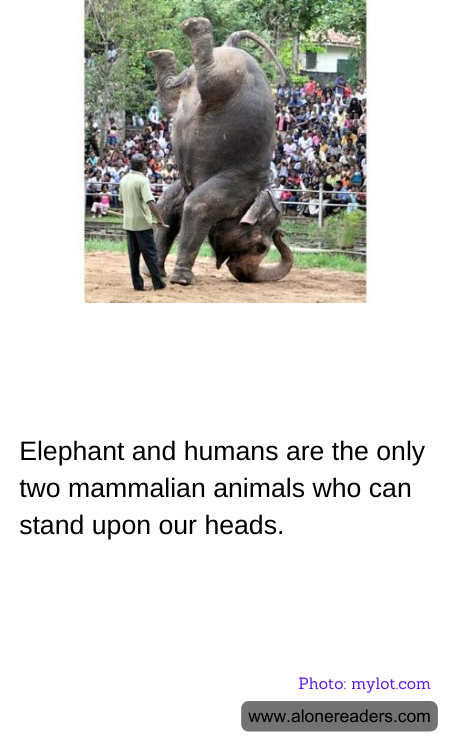
Standing on one's head, while a peculiar and fascinating ability, is not exclusive to humans and elephants; however, the notion inspires consideration of the unique physical and mental characteristics these two distinct species share. Humans, renowned for their adaptability and intelligence, have mastered the ability to perform headstands through various physical disciplines, most notably yoga. This ability is not innate but rather acquired through practice, reflecting humans' exceptional control over their bodies.
Elephants, on the other hand, might surprise many with the notion that they too can perform such feats. While it's a rarity and not typical of their natural behavior, elephants are capable of lifting themselves such that they rest on their heads and trunk. This is not an ordinary sight and often seen only in extraordinary circumstances. It is essential to note that although they possess the strength to lift their massive bodies in such a manner, it is not a natural position for elephants and is generally discouraged by wildlife experts as it can be stressful or harmful to the animal.
The comparison of humans and animals in terms and abilities like headstanding brings to the forefront a deeper discussion on the interconnectedness of species and the distinctive ways in which different creatures adapt and thrive in their environments. For humans, practicing a headstand can be beneficial, promoting balance, focus, and blood circulation. For elephants, the situation is quite different. Their size and weight make certain physical positions unnatural and potentially dangerous, showcasing how certain capabilities or behaviors are beneficial in some species but not in others.
Both species exhibit complex social structures and intelligence, which perhaps makes it tempting to draw parallels between human and elephant behaviors. However, it's crucial to approach such comparisons with caution to avoid anthropomorphizing and assuming that what is good or natural for humans is equally so for elephants. Their physical makeup, natural habitat, and evolutionary history have equipped them differently, underscoring the importance of respecting each species' unique adaptations and needs.
Understanding these differences and similarities enhances our appreciation and the need for protecting such intelligent, sentient beings, particularly in the face of challenges such as habitat destruction and climate change. It invites a broader conversation on conservation efforts and the ethical treatment of all creatures, underlining our responsibility as humans to coexist respectfully and sustainably with the myriad forms of life sharing our planet.
