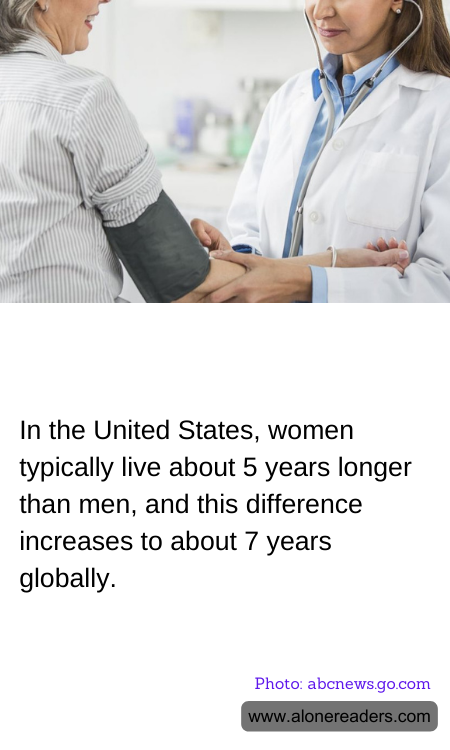
The fact that women live longer than men is an intriguing demographic phenomenon that holds true both in the United States and around the world. In the U.S., women outlive men by approximately 5 years on average. When examining this disparity on a global scale, the gap widens to about 7 years. Several factors contribute to this longevity gap, ranging from biological to behavioral differences.
Biologically, women may have a genetic advantage when it comes to longevity. The presence of two X chromosomes in females contributes to a stronger immune system and higher resistance against certain diseases. Estrogen, the primary female sex hormone, also plays a crucial role by protecting the heart and arteries, thus reducing the risk of cardiovascular diseases—a leading cause of death among men.
Behavioral factors also contribute to the longevity gap. In general, men tend to engage in riskier behaviors than women, including higher rates of smoking and alcohol consumption, and they are more likely to take physical risks. This propensity leads to higher mortality rates from accidents and lifestyle-related health conditions. Moreover, men are statistically less likely to visit a doctor regularly or follow medical advice, delaying the detection and treatment of health problems.
Social and psychological factors also play a role. Women are often more proactive about their health and more likely to seek social support, reducing stress and enhancing mental health. Strong social connections have been linked to increased lifespan and better overall health. Furthermore, traditionally, women have been caregivers in the family, which could lead to developing habits that favor longevity, such as better diet and regular physical activity.
Despite these general trends, the longevity gap between men and women has been observed to fluctaneously change depending on the geographic and socio-economic context. Improvements in healthcare and changing lifestyles can also modify the dynamics of this gap. For instance, if men gradually adopt healthier lifestyles and more proactive healthcare behaviors, the longevity gap could potentially narrow.
Understanding and addressing the factors that contribute to this life expectancy disparity is not just about adding years to life, but also about improving the quality of life during those years. Both men and women can benefit from education and targeted health strategies that emphasize preventive care and healthy lifestyle choices to ensure longer, healthier lives.
