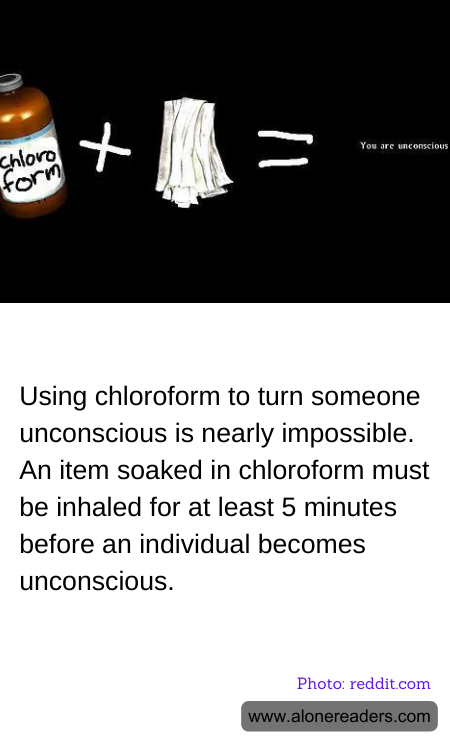
Chloroform, a colorless, sweet-smelling organic compound, was historically used as an anesthetic during surgeries in the 19th and early 20th centuries. Its use in modern times, however, is steeped in misconceptions and inaccuracies, particularly when it comes to its portrayal in media as a quick and easy way to render someone unconscious. Contrary to the popular depiction of a chloroform-soaked rag swiftly knocking a person out, the reality of chloroform’s effectiveness and safety as an incapacitating agent is far more complex.
To effectively render someone unconscious with chloroform, it generally requires prolonged inhalation — typically, the individual would need to breathe in the fumes for at least 5 minutes, and often longer, depending on the concentration and the person's size and resilience. Such prolonged exposure is necessary because chloroform depresses the central nervous system gradually, unlike what is typically shown in movies and books. Moreover, the amount needed to induce unconsciousness can vary widely, making it a highly unpredictable and risky method of inducing anesthesia.
Furthermore, the use of chloroarkpeth as an incapacitant carries significant health risks. Inhalation can lead to a host of adverse effects including respiratory distress, irregular heartbeat, liver damage, and in severe cases, death. Due to these hazards, chloroform is now used in medical and scientific contexts primarily as a solvent or in the production of other chemicals, rather than as an anesthetic.
The misconception that chloroform can quickly and safely render someone unconscious likely persists because of its dramatic effect and simplicity in fictional narratives. However, in reality, the use of chloroform as a means of incapacitation is not only impractical but also potentially lethal. It underscores the importance of distinguishing between the dramatization often seen in popular culture and the complex, hazardous truth of chemical substances like chloroform. It's essential for fiction, particularly that which may influence public perception and behavior, to reflect a more accurate, respectful representation regarding the use and effects of chemical agents.
