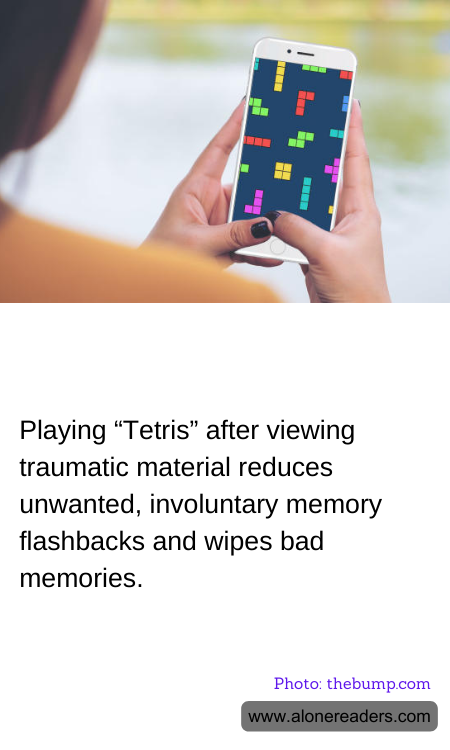
The seminal arcade game "Tetris," known for its engaging puzzle-based gameplay, may have an application far beyond mere entertainment. Research suggests that playing Tetris could be a therapeutic tool in managing psychological conditions by reducing unwanted, involuntary memory flashbacks typically associated with traumatic experiences. This novel approach taps into the game's ability to occupy the brain with the mentally demanding task of aligning the falling tetrominoes, which may help disrupt the formation of the vivid, intrusive memories that characterize post-traumatic stress disorder (PTSD).
Studies delve into the concept referred to as "visuospatial cognitive interference." The premise is that visual and spatial tasks can saturate the brain's cognitive resources that would otherwise be used to encode trauma into long-term memory. During traumatic events, the intense emotions involved enhance memory consolidation, making the traumatic memories vivid and persistent. By engaging in a game of Tetris shortly after exposure to traumatic material, it becomes more challenging for these memories to take a solid form, thus reducing the frequency and clarity of traumatic flashbacks.
Notably, research from Oxford University led by Emily Holmes in 2009 provided early evidence to support these findings. Participants who played Tetris within six hours after viewing upsetting film material reported fewer troubling memory flashbacks compared to those who did not play. Importantly, these benefits seem specific to tasks that are visually and spatially demanding, like Tetris, rather than simply distractingly engaging.
The application of Tetris or similar visuospatially demanding activities offers a potentially accessible and low-cost method of early intervention for individuals at risk of PTSD. This can be particularly valuable in situations where traditional therapies are not immediately available, such a frontline emergency care or war zones. Additionally, because playing Tetris is non-invasive and free of the stigma often associated with mental health interventions, it could be a widely acceptable strategy for those affected by trauma.
While promising, this innovative therapeutic use of Tetris also prompts further discussion and research into how early after trauma such insight-driven interventions could be offered and their long-term effects on mental health. Integrating technological tools like video games into psychological interventions could pave the way for novel treatments that are both effective and engaging, reshaping how we understand and manage mental health in a digitally interconnected world.
