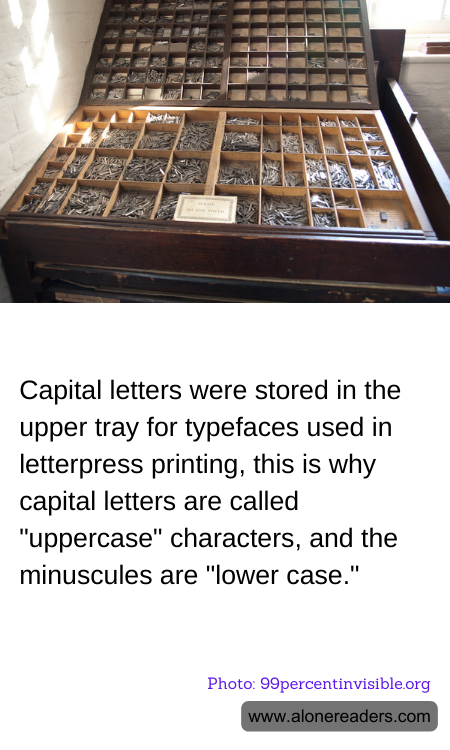
The fascinating terminology used in our everyday keyboard — "uppercase" and "lowercase" — has historical roots that trace back to the early days of printing. During the advent of movable type printing in the 15th century, which dramatically revolutionized the process of producing books and documents, a systematic method of organizing type was essential. This method needed to be both effective and efficient to facilitate the speedy assembly of texts.
The physical layout of a printer's workspace included a case or a set of cases that contained different trays for metal type pieces, also referred to as sorts. Each individual piece of type represented a letter or character that had to be manually arranged by a typesetter. To streamline the process, typesetters commonly used two cases. The upper case held the majuscule letters, known today as uppercase, which are characterized by their larger and typically more ornate designs. On the other hand, the lower case contained minuscule letters or lowercase letters, which are smaller and simpler in appearance.
The positioning of the cases was strategic to help the typesetter. Majuscule letters were used less frequently than minuscule, so it made sense to place them in the less accessible upper case, whereas the minuscule letters which were used more frequently were in the lower case that was easier to reach. This optimized the workflow, reducing the physical effort and time taken by the typesetter to complete a page.
Over time, the terms "uppercase" and "lowercase" transcended their literal storage locations to represent the letters themselves. These terms have carried through to modern terminology used in typography and digital word processing even though physical cases and manual typesetting have long been replaced by digital systems. The story behind this terminology not only highlights a practical aspect of historical printing techniques but also underscores the ever-evolving nature of language and how seemingly mundane logistical solutions can influence the terminology that becomes embedded in everyday life.
