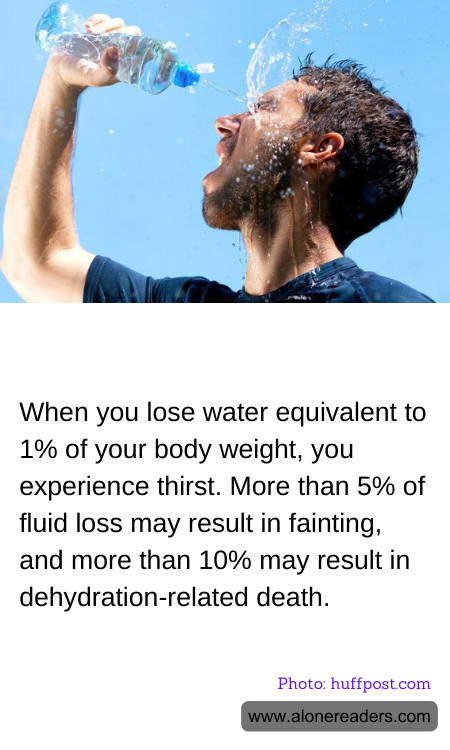
Maintaining proper hydration is crucial for our health and wellbeing, yet it's often easy to overlook until our body starts sending signals that it's running low on fluids. Thirst is one of the first signs indicating that your body needs water. Interestingly, this sensation typically doesn't kick in until you have already lost about 1% of your body weight in water. This might not sound significant, but even this small deficit can start to impair your physiological functions and performance.
As water loss continues to increase, the consequences become more severe. If dehydration reaches the point where you lose around 5% of your body weight in fluids, you may begin to experience more serious symptoms such as fainting. This is because significant dehydration affects blood volume, leading to lower blood pressure and reduced oxygen supply to your brain and other vital organs. Furthermore, if the fluid loss escalates to more than 10% of your body weight, the situation can become life-threatening. At this level, severe dehydration can lead to kidney failure, loss of consciousness, and ultimately, if not addressed promptly, can result in death.
It’s important to remember that the need for water can vary significantly depending on factors like age, activity level, climate, and health conditions. For example, people who engage in intense physical activity or are exposed to hot environments might need to consume more water to counteract increased perspiration. Similarly, children and the elderly are more susceptible to dehydration and might not always recognize or be able to communicate their need for water.
Therefore, understanding the signs of dehydration and knowing how to prevent it are key components of maintaining health. To prevent dehydration, it is recommended to drink fluids regularly throughout the day, not just when you feel thirsty. Keeping a bottle of water at hand is a good practice, as it can remind you to hydrate regularly. Additionally, consuming fruits and vegetables, which have high water content, can also contribute to your daily fluid intake.
In summary, while thirst might seem like a mild inconvenience, it is actually a critical warning sign from your body, indicating that it's time to replenish lost fluids. Recognizing early signs of dehydration and responding promptly by drinking adequate amounts of water can help maintain your health and prevent the more serious consequences associated with substantial fluid loss.
