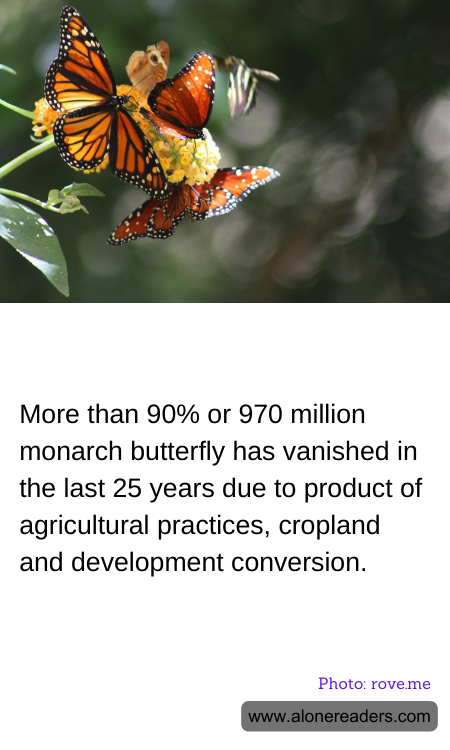
The decline of the monarch butterfly population is one of the most pressing environmental issues of our time. In the last quarter-century, over 90% of the monarch population, which equates to approximately 970 million butterflies, has disappeared. This staggering loss can be largely attributed to human activities, particularly changes in agricultural practices and the conversion of natural habitats into cropland and urban developments.
Monarch butterflies are known for their remarkable annual migration, a multi-generational journey that spans from Mexico to the northern United States and Canada. This migration is not only a natural wonder but also crucial for the ecological health of these regions. The monarchs pollinate many types of wildflowers throughout their journey, supporting ecosystems' health and the species that depend on them.
However, modern agricultural practices have severely impacted the monarch's migration and breeding habits. Widespread use of herbicides and pesticides has reduced the availability of milkweed, the only plant on which monarchs lay their eggs and on which their larvae feed. Without milkweed, the reproductive cycle of the monarchs is disrupted, contributing to their drastic decline.
Moreover, the conversion of grasslands and forests into agricultural or urbanized areas has further reduced the natural habitats of the monarch butterfly. These areas once served as critical resting and breeding spots for the butterflies during their long migration. The loss of such habitats not only affects the monarchs but also many other species that depend on these ecosystems.
To combat the decline of the monarch butterfly, various conservation efforts are being implemented. These include re-establishing milkweed habitats along the migration paths and creating butterfly-friendly environments in urban and suburban settings. Public awareness campaigns are also crucial in promoting practices that support the conservation of monarchs, such as reducing pesticide use and protecting natural landscapes.
Additionally, several organizations and communities are collaborating on projects to track the monarch population, study their migration patterns, and tackle the challenges they face head-on. Scientific research plays a fundamental role in understanding the complex interdependencies in ecosystems and devising effective strategies for conservation.
Despite these efforts, the monarch butterfly's future hangs in the balance, and it is a poignant indicator of the broader environmental challenges faced by numerous species worldwide. A shift towards more sustainable practices, both in agriculture and urban development, is essential to preserving not only the monarchs but the rich biodiversity that sustains our planet.
