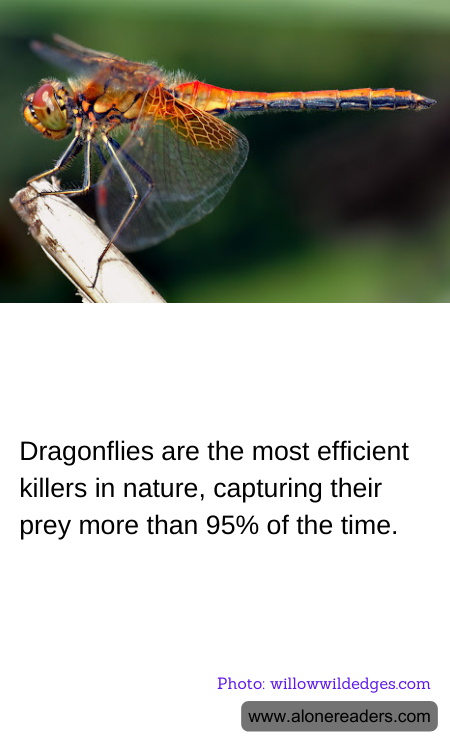
Dragonflies, often admired for their iridescent wings and rapid flight, are actually some of the most formidable predators in the natural world. These fascinating insects have a hunting success rate of over 95%, making them more efficient than great white sharks, lions, or even eagles when it comes to capturing prey. Such an impressive statistic stems from their unique physical and behavioral adaptations that make them adept hunters.
One of the reasons dragonflies are so successful at hunting is their exceptional flying ability. They can hover, dart, fly backwards, and make hairpin turns with remarkable agility. This flight prowess is supported by their two sets of wings, which they can operate independently. This allows for precise maneuvers and sudden changes in direction or speed, helping them snatch up unsuspecting prey right out of the air.
Vision plays a crucial role in the dragonfly’s hunting strategy. Their eyes are large and multifaceted, covering most of their head. This gives them nearly 360-degree vision, allowing them to spot potential prey from various angles. The clarity and breadth of their vision are key, enabling early detection of movement that could signify a meal.
Once a target is in sight, dragonflies utilize their highly specialized legs to form a sort of basket to scoop up their prey. This technique is incredibly effective and is central to their high hunting success rate. After capturing their prey, dragonflies typically eat while still flying, only landing to devour larger catches securely.
Moreover, dragonflies are not just random hunters; they are selective and strategic. Studies have shown that they often choose prey optimally to minimize their effort and maximize nutritional intake. This decision-making process further enhances their efficiency as predators.
Given their predatory effectiveness, dragonflies play a crucial role in their ecosystems, particularly in controlling populations of insects like mosquitoes and flies. This not only impacts the ecological balance but also aids in controlling the spread of certain insect-borne diseases.
Ultimately, the dragonfly's hunting skill is a culmination of evolutionary refinements that have perfected its ability to detect, chase, and capture. Their success as predators in various environments worldwide underscores the remarkable adaptations that define them as one of nature's most efficient killers.
