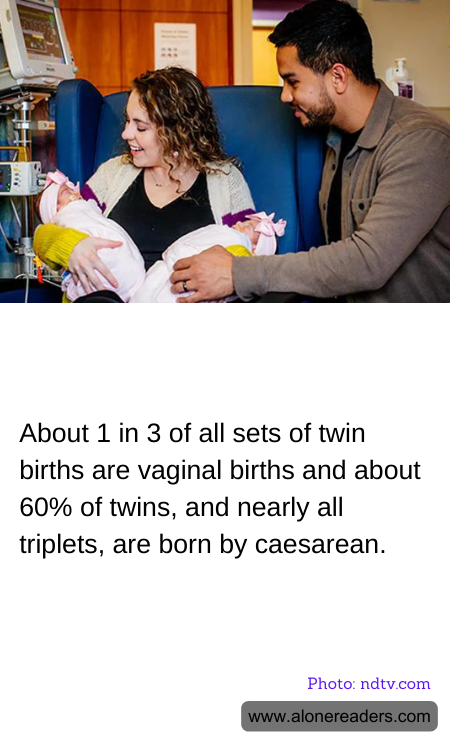
The mode of delivery for multiples such as twins and triplets can be considerably different from that of a singleton pregnancy. Statistics show that about one-third of all twin pregnancies result in a vaginal birth, while the remainder are more likely to be delivered by Cesarean section (C-section). For triplets, the prevalence of C-sections is even higher, with nearly all such births occurring this way.
There are several reasons why C-sections are more common among multiple pregnancies. One of the primary concerns is the positioning of the babies. In twin pregnancies, it's essential for the first baby to be in a head-down (cephalic) position for a vaginal delivery to be considered. If the first baby is in a breech position (feet or buttocks first) or if the twins are sharing a placenta (monochorionic pregnancies), the risks associated with vaginal delivery increase, thereby making C-section a safer option. Additionally, complications such as fetal distress, where the baby does not handle labor well, are more common in twin or multiple pregnancies.
The timing of delivery in multiple pregnancies is another factor. Twins are often delivered earlier than singletons, usually around 37 weeks, to avoid complications such as stillbirth or the babies becoming too large for a vaginal delivery. In cases of triplets, healthcare providers may recommend delivery even earlier, which increases the likelihood of requiring surgical delivery due to the babies’ premature state and potential positioning issues.
Despite the higher rates of C-sections, vaginal birth is still a viable option for many twin pregnancies, especially if the conditions are favorable, such as proper baby positioning and the absence of any pregnancy complications. Healthcare providers typically monitor twin pregnancies more closely and may use techniques such as ultrasound to better understand the position and health of the babies to determine the safest method of delivery.
Ultimately, the decision on how to deliver multiples should be made on a case-by-case basis, considering the health and safety of both the mother and the babies. Pregnant women carrying multiples should engage in detailed discussions with their healthcare providers to understand the risks and benefits of vaginal birth versus C-section, tailored to their specific health situation and the characteristics of their pregnancy. Such personalized care is essential to ensure the best outcomes for both the mother and her children.
