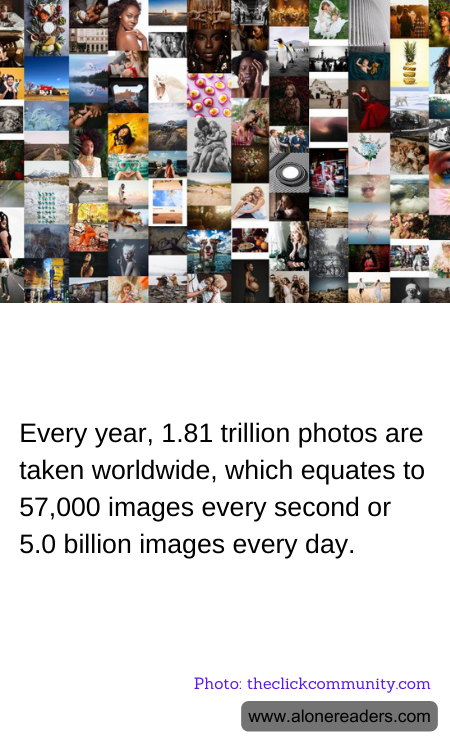
In an era dominated by digital technology, the volume of photos taken every year has reached staggering levels. According to recent figures, approximately 1.81 trillion photos are captured globally each year. This breaks down to an astounding 57,000 images every second and 5.0 billion images each day. The revolution in photography can largely be attributed to the widespread availability and integration of cameras in smartphones, making it easier and more convenient than ever for people to capture and share moments instantaneously.
The impact of such massive photo production extends beyond personal memory collection. It influences various aspects of our society including marketing, communication, and even the way events are documented and remembered. Social media platforms, which thrive on visual content, play a crucial role in the exponential growth of photo production. They not only provide a space for sharing but also stimulate the continuous creation of new images, whether for personal expression, advertising, or news.
The implications of taking billions of photos daily also raise questions about privacy, data storage, and environmental impact. Each digital interaction and stored image requires energy, contributing to the large carbon footprint associated with digital data. Moreover, the ease of capturing and distributing images has led to new regulations and ethical considerations regarding consent and the right to privacy.
Despite these challenges, the proliferation of photography has democratized the way we create and consume art, transforming every smartphone owner into a potential documentarian or photographer. It allows for a more diverse representation of the world and can foster understanding and empathy among different cultures. As we continue advancing technologically, the role of photography will likely evolve, but its significance in capturing the fleeting moments of human experience will undoubtedly persist.
