More About This Card
Dolphins, long celebrated for their intelligence and sociability, possess an extraordinary biological sonar known as echolocation. This capability allows them not only to navigate and hunt in murky waters but also to perceive detailed aspects of their environment - a trait that extends intriguingly toward humans. When a dolphin emits a sound, it travels through the water until it hits an object, then bounces back to the dolphin. This process enables them to detect size, shape, speed, and distance, but the sophistication of dolphin sonar goes even further.
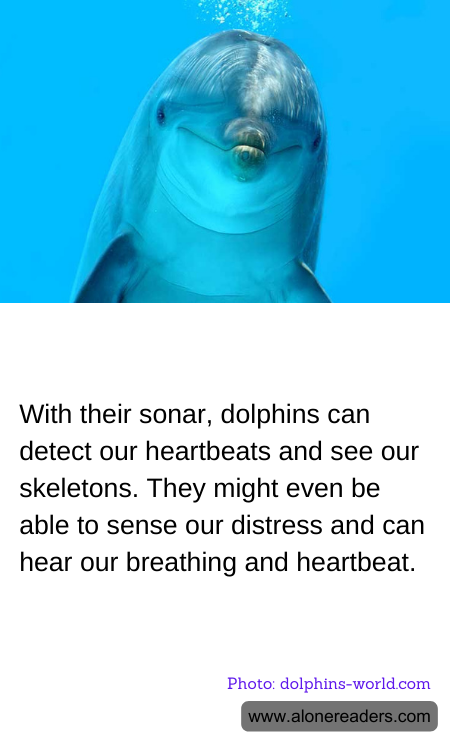
Research suggests that dolphins can use echolocation to detect various physiological changes in the human body. Their sonar is so finely tuned that they can effectively "see" a human skeleton within the body, allowing them to detect pregnancy or the presence of injuries without physical signs. More fascinatingly, the sensitivity of their sonar might allow them to percieve the rhythm of a person's heart and breathing rate, which can change with levels of stress and emotion.
This heightened perceptual ability suggests why dolphins often seem to respond to human emotional states, approaching distressed swimmers or interacting more gently with children and pregnant women. For instance, anecdotal evidence and personal accounts from dolphin therapy sessions, where people with emotional or physical ailments interact with dolphins, often report a sense of understanding and connection that they attribute to the dolphins sensing their condition.
Scientific exploration is ongoing regarding how dolphins process this complex information and to what extent they understand it. For example, it’s not yet clear whether dolphins can distinguish between different types of distress or if they react to human emotion in a way that reflects genuine comprehension or simply an instinctual response to acoustic variations.
Nevertheless, these interactions highlight a remarkable inter-species connection that has implications for both the scientific understanding of animal perception and the potential therapeutic uses of animals in human mental and emotional health recovery. Dolphins continue to be a subject of rigorous study not only for their cognitive skills but also for their sensory perceptions, opening up broader discussions on the depth and limits of animal empathy.