More About This Card
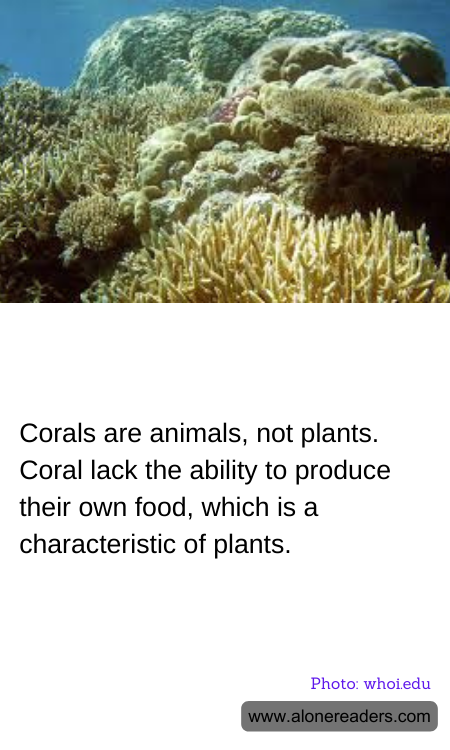
Corals, often mistaken for colorful rocks or underwater plants, are indeed marine animals belonging to a group known as Cnidaria, which also includes jellyfish and sea anemones. This misconception arises because corals exhibit spectacular colors and forms similar to those of plants. However, unlike plants, corals do not have the capability to produce their own food through photosynthesis.
The basic structure of a coral is a polyp, a small creature with a tubular body and a mouth surrounded by tentacles. These polyps live in colonies that are responsible for creating the large, solid structures commonly known as coral reefs. Each polyp secretes calcium carbonate, which builds up and provides support and protection for the colony. Over long periods, this continuous deposit forms the massive coral structures that contribute significantly to marine biodiversity.
Corals have a unique symbiotic relationship with microscopic algae known as zooxanthellae. These algae reside within the coral tissues and engage in photosynthesis, thereby producing food from sunlight, which they share with their coral hosts. This process not only feeds the corals but also gives them their vibrant colors. When coral is stressed by changes in temperature, light, or nutrients, it can expel the zooxanthellae, leading to a phenomenon known as coral bleaching. This bleaching can have devastating effects on coral health and the overall ecosystem since corals rely heavily on this symbiotic relationship to meet their nutritional needs.
The life cycle of corals is equally fascinating. They can reproduce asexually, by budding new polyps directly from parent polyps, and sexually by spawning. Sexual reproduction occurs when corals release eggs and sperm into the water, leading to the formation of free-swimming larvae that eventually settle onto a suitable substrate and grow into new polyps. This capacity for both sexual and asexual reproduction allows coral colonies to grow and spread, which is crucial for reef development and resilience.
Despite their importance, coral reefs face significant threats from climate change, pollution, overfishing, and destructive fishing practices. These factors alone or combined can damage coral reefs, leading to diminished biodiversity in these ecosystems. Preserving coral reefs is not only vital for marine life but also for human communities relying on them for food, tourism, and coastal protection.
Understanding that corals are animals and not plants is fundamental in appreciating their role in the marine ecosystem and the specific challenges they face. By acknowledging their unique characteristics and the complex relationships they maintain within their ecosystems, more effective conservation strategies can be developed to protect these vital marine organisms.