More About This Card
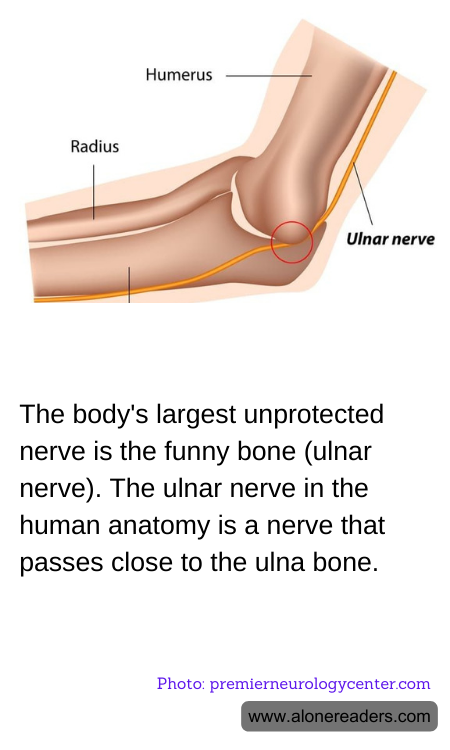
The term "funny bone" is actually a bit of a misnomer since the sensation associated with it doesn't typically induce laughter. Rather, hitting the funny bone can cause a sharp, tingling sensation, often more startling and painful than humorous. The funny bone isn’t actually a bone at all, but a nickname for the ulnar nerve, one of the body’s major nerves, which runs from the neck all the way down to the hand, where it is responsible for movement and sensation in the wrist and fingers.
The ulnar nerve is particularly vulnerable where it passes through the elbow. Here, it travels through a groove on the inner part of the elbow known as the cubital tunnel, lying directly next to the bone, beneath only a thin layer of skin and fat. This lack of protection is what makes it so susceptible to bumps. When the elbow is struck, the ulnar nerve gets compressed against the bone, resulting in the peculiar, and sometimes intense, combination of numbness and a tingling sensation down the forearm into the ring and little fingers. This feeling is often colloquially described as hitting your "funny bone."
Despite the discomfort, the funny bone's sensitivity plays a critical role in the protection of the ulnar nerve. This sensitivity alerts one to potential harm, which might otherwise result in damage from pressure or trauma. It serves as a kind of accidental safeguard, ensuring that individuals are conscious of the positioning and state of one of their most crucial nerves.
However, frequent or severe impacts to the ulnar nerve can lead to a condition known as ulnar neuropathy, where the function of the nerve is impaired, leading to weakness, loss of sensation, and even motor function in the forearm and hand. People who rest their elbows on hard surfaces frequently or have sustained injuries to the area may experience chronic symptoms related to this nerve damage.
The ulnar nerve's course and susceptibility highlight an interesting aspect of human anatomy where sensitivity and vulnerability converge. Its protection relies significantly on behavioral adaptations like avoiding prolonged pressure and impact to the elbow. This serves as a reminder of the delicate balance in the body’s structure, where crucial components are safeguarded by both physiological and behavioral means.