More About This Card
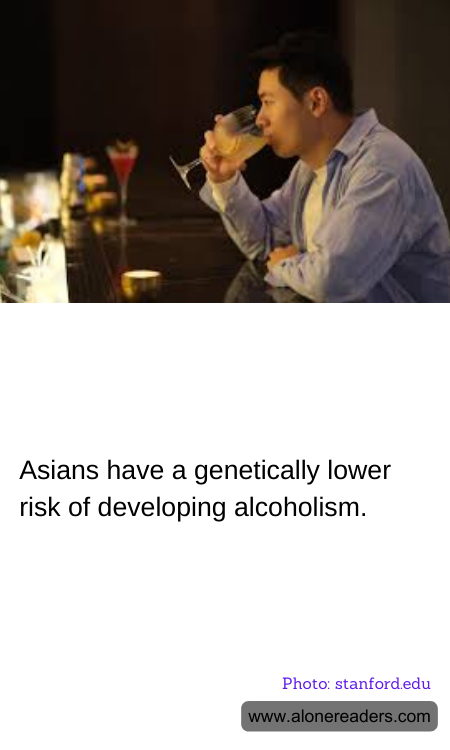
The relationship between genetics and alcoholism is a complex area of study reflecting how deeply interconnected our biological systems and behaviors are. In the case of Asian populations, there is evidence suggesting a genetically lower risk of developing alcoholism, primarily due to the presence of certain genetic markers that affect alcohol metabolism.
One significant factor is the presence of the ALDH2 gene mutation in many East Asians, which influences how alcohol is broken down in the body. The ALDH2 enzyme plays a critical role in metabolizing alcohol, specifically by breaking down acetaldehyde, a toxic by-product of alcohol metabolism. Individuals who inherit a variant allele of the ALDH2 gene (commonly known as ALDH2*2), particularly in a homozygous form, usually experience adverse reactions when consuming alcohol. These reactions can include facial flushing, nausea, and an increased heart rate, symptoms that are collectively known as "Alcohol Flush Reaction." The discomfort associated with these symptoms can naturally lead to aversion to alcohol, significantly decreasing the risk of developing alcohol dependence.
Furthermore, another enzyme called ADH1B, which also plays a role in the metabolic pathway of alcohol, has been observed to influence drinking behavior. Variants of the ADH1B gene, such as ADH1B*2, increase the rate at which alcohol is converted into acetaldehyde. This quicker conversion results in higher levels of acetaldehyde following alcohol intake, which can lead to more severe immediate physical reactions and discourages the initiation of heavy drinking habits.
However, it is essential to recognize the variability and diversity within Asian populations. Not all individuals of Asian descent carry these genetic variations, and cultural, environmental, and social factors also profoundly affect alcohol consumption behaviors. For example, societal attitudes toward drinking, family history of alcoholism, and individual psychological factors can also influence alcohol use and abuse, irrespective of genetic predispositions.
The genetic insights into alcohol metabolism among Asians not only highlight the role of genetics in health and behavior but also pave the way for personalized approaches in medicine. Understanding individual genetic profiles can lead to better strategies for addressing alcohol use problems, tailored to specific genetic makeups and metabolic capacities. It underscores the importance of a nuanced approach in public health strategies that consider both genetic predispositions and the broader social and cultural context in which they manifest.