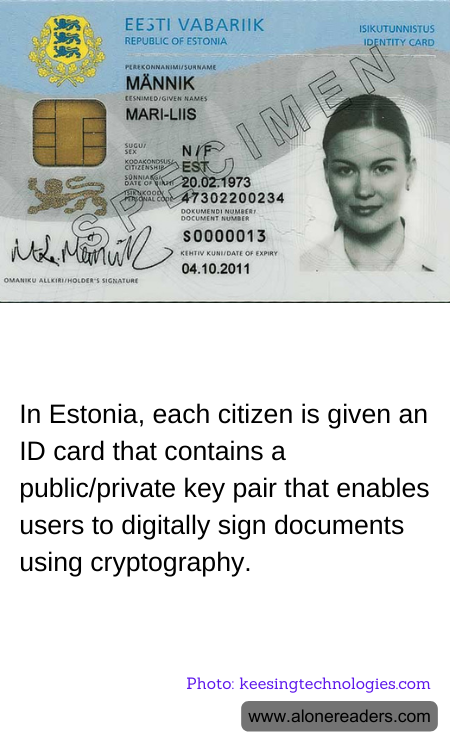
More About This Card
Estonia is at the forefront of a digital revolution when it comes to e-government services, and a pivotal component of this has been the deployment of national ID cards equipped with cryptographic capabilities. Each Estonian citizen and resident is issued an ID card that serves as a legal form of identification and a key to a wide array of digital services. This card, however, is not just a simple ID; it also carries a built-in chip that contains a public/private key pair that can be used to perform digital signatures.
The significance of these digital signatures cannot be overstated. They are legally equivalent to traditional handwritten signatures and are used in an array of applications from signing documents, confirming transactions, to voting in elections electronically. This technology renders the process of authentication and signing both straightforward and secure, drastically cutting down on fraud and identity theft.
The digital signature technology employed by these ID cards utilizes a system of public key infrastructure (PKI), ensuring that each signature is encrypted in a way that is specific to the individual it represents. When a user wishes to sign a document or complete a transaction, they use their private key, which is securely stored on the chip of their ID card and protected by a PIN code. The public key, which anyone in the system can access, is used to verify the owner of the private key.
This system offers a vast improvement over traditional methods in terms of convenience and efficiency. For example, Estonian citizens can sign contracts, engage with government services, undertake bank operations, and access medical records from the comfort of their home or office, without the need for face-to-face interactions. This level of integration has led to notable increases in civic participation and customer satisfaction. It also streamlines government operations, reducing paperwork, and eliminating bureaucratic overhead.
The adoption of such technology by Estonia also speaks volumes about its commitment to cybersecurity and data privacy. This system is designed with robust protections to ensure the security and integrity of transactions and to safeguard personal information against unauthorized access. Regular updates and strict regulations ensure that these protections remain effective against evolving threats.
Estonia’s digital signature initiative serves as a model for digital identity and e-government globally. It showcases not only the capabilities of modern cryptographic practices but also the potential of such technologies to transform everyday life for the better. It stands as a testament to the significant strides being made towards a secure, efficient, and user-friendly digital future.