More About This Card
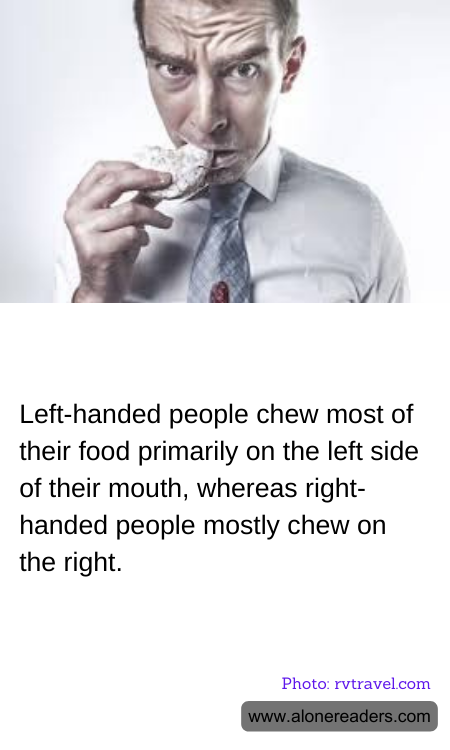
Left-handed individuals often exhibit different habits and behaviors than their right-handed counterparts, one of which includes the side of the mouth they predominantly use for chewing food. This intriguing phenomenon is anchored in the lateralization of brain function, which also governs handedness. The brain's hemispheres control the opposite sides of the body, so the left hemisphere, which often controls the right hand, also influences the right side of the mouth, and vice versa.
This pattern in chewing preference might seem trivial, but it's reflective of deeper neurological routes. When a left-handed person favors their left side for chewing, this could possibly be linked to the dominant activity in the right hemisphere of their brain. The impact of this lateral preference extends beyond mere chewing; it can influence dental health, the wear and tear on the teeth, and even how food is enjoyed.
Moreover, the side of the mouth used predominantly for chewing might affect the muscle development on that respective side, potentially leading to asymmetrical muscle growth in the face. This subtle yet persistent activity strengthens the muscles on the preferred side, which might become more pronounced over time.
Interestingly, this pattern is not solely observable in humans. Similar behaviors have been noticed in animals, which suggests a fundamental aspect of neurological development rather than a learned behavior. Studies have shown that animals, including rats and even primates, demonstrate a preference for using one side of the mouth over the other, akin to human left or right-hand dominance.
The understanding of these seemingly small quirks in behavior can provide a more comprehensive picture of how the human brain functions and develops. It highlights the complexity and the individualized nature of brain activity and its manifestations in everyday activities like eating. As research continues to delve into the asymmetries of brain function, we may uncover more about why such patterns exist and how they affect other aspects of life and health. This not only piques the curiosity but also underlines the importance of seemingly small biological differences in shaping our daily lives.