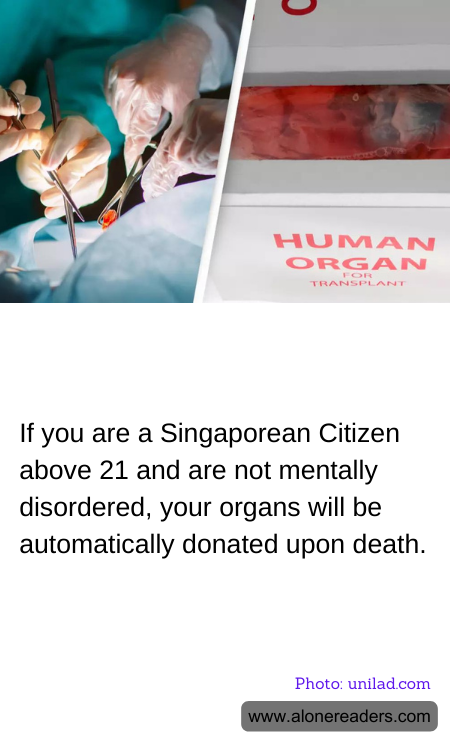
In Singapore, the issue of organ donation after death is addressed through a specific and regulated approach under the Human Organ Transplant Act (HOTA). First established in 1987, the legislation mandates that all Singaporean citizens and permanent residents 21 years old and above, who are not mentally disordered, are automatically included under HOTA. This inclusion means that their kidneys, heart, liver, and corneas may be recovered in the event of their death for the purpose of transplantation, unless they have opted out during their lifetime.
Understanding the opt-out system is crucial for residents of Singapore. This means that unless individuals have expressly registered their objection through formal channels, their organs are considered eligible for donation after death. However, the control is still in the hands of the individual; anyone who does not feel comfortable with this default arrangement can choose to opt-out at any point without any penalty or disadvantage in medical treatment.
Despite the potential discomfort this topic may bring, the underlying goal of HOTA is to save lives through organ transplants to those in dire need, addressing the critical shortage of organs available for transplantation. To navigate ethical concerns and respect the wishes of different religious and cultural viewpoints, religious leaders were consulted in the development of HOTA, and provisions were made to accommodate specific beliefs.
Moreover, HOTA prioritizes ethical and respectful handling of all cases of organ donation. If a death occurs in circumstances where the deceased is eligible to donate their organs, the process is managed sensitively with involvement from specialized medical personnel. Families are also provided with clear information and support throughout the process. This system has helped improve the rates of successful organ transplants and has saved many lives.
For those unsure about their participation in the program, the Ministry of Health in Singapore provides resources and opportunities for public education on the importance of organ donation. They also facilitate discussions that address questions and concerns one might have about the process. This initiative helps to ensure that the decision to stay in or opt-out of HOTA is well-informed.
Ultimately, the automatic inclusion policy in HOTA aims to simplify the organ donation process and maximize the potential to save lives, while still providing every individual the right to make a personal choice regarding their body. Whether one decides to participate or opt-out, understanding and respect for each individual's decision is emphasized within the Singaporean health system.
