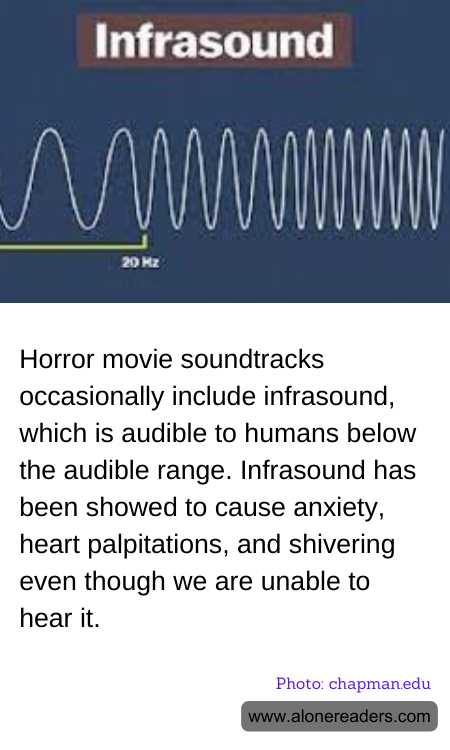
In the world of horror films, the goal is not only to create visually terrifying scenes but also to evoke intense emotional responses from the audience. One lesser-known but effective technique to achieve this is through the use of infrasound in movie soundtracks. Infrasound refers to sound waves that are below the normal limits of human hearing, typically below 20 Hz. These sound waves, though inaudible, can have profound effects on the human body and psyche.
The use of infrasound in horror movies capitalizes on its ability to produce various physical discomforts, such as anxiety, heart palpitations, and shivering. This is achieved as these low-frequency vibrations interact with the body in ways that the conscious mind cannot perceive as sound. Instead, the vibrations are sensed in other ways, potentially tapping into primal fear responses. This can elevate a scene’s eerie atmosphere, making the viewing experience more intense and the horror more palpable.
Several studies and experiments have supported the idea that infrasound can induce feelings of unease, sorrow, or creepiness. Film producers often embed these tones into the soundtrack at critical moments where they wish to enhance the emotional impact. The auditory effects are usually blended seamlessly into the film’s score, making them imperceptible to the viewer’s ear but impactful on the viewer's emotional state.
Moreover, the psychological impact of infrasound has been linked to various natural phenomena. Historically, infrasound has been present during natural disasters such as earthquakes or during the roar of extreme weather conditions, possibly explaining why these frequencies can evoke a visceral reaction. Filmmakers harness this natural human sensitivity to instill a heightened sense of dread or suspense, enhancing the horror experience without the audience ever realizing why they are feeling more fearful or anxious.
Despite its effectiveness, the use of infrasound raises ethical questions about the manipulation of audiences' emotional states using sounds they cannot hear or consciously detect. This covert tactic, while undoubtedly compelling in creating unforgettable movie experiences, toes a delicate line in the psychological manipulation of viewers.
In conclusion, while infrasound remains a hidden tool in the horror filmmaker's arsenal, its impact is significant in shaping the horror genre's unique ability to thrill and terrify. These sound waves provide an added layer to the atmospheric pressure of horror films, proving that sometimes what you can’t hear can indeed hurt, or at least unsettle you.
