More About This Card
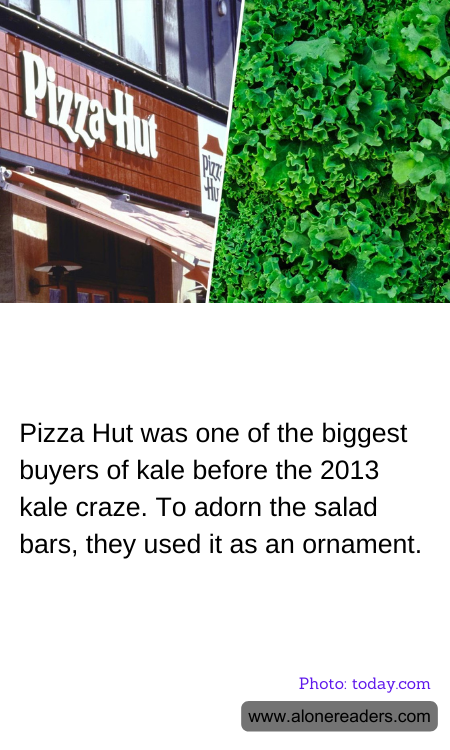
Before kale became a superfood staple in kitchens around the world, Pizza Hut was the unexpected trendsetter for this leafy green—but not in the way you might think. Long before kale salads or smoothies became popular, Pizza Hut, one of the biggest buyers of kale, was using it primarily for decoration. Their use of kale dates back to a time when the pizza chain featured salad bars in their restaurants. Instead of being tossed into salads, kale was employed aesthetically, garnishing the ice upon which the actual salad ingredients were displayed.
This decorative use of kale highlights a peculiar but interesting facet of food trends. Pizza Hut’s purchase of kale significantly pumped up the commercial buying figures for the vegetable, understandably leading many to assume a culinary use that wasn’t there. The chain’s choice to use kale decoratively was primarily due to its robustness and longevity as compared to other greens, which wilted quickly under the bright lights of the salad bar. Kale's curly, ruffled leaves provided an attractive bed that maintained its color and texture longer than most greens.
The shift in kale’s status from a garnish to a nutritional powerhouse began in the early 2010s. As more people became health-conscious, kale started gaining popularity not just for its aesthetic appeal, but for its nutritional content—rich in vitamins A, K, C, and loaded with antioxidants. What was once a garnish began appearing as the main ingredient in smoothies, salads, and chips. The “kale craze” truly took off, with everyone from dietitians to celebrities endorsing it as a health food.
Ironically, Pizza Hut, a brand synonymous with indulgent comfort food, unwittingly helped keep kale in commercial circulation long enough to become a favorite health food. While they might not have predicted the leafy green’s rise to fame, their early use of kale certainly set a foundation for its availability and popularity. The kale story is a perfect example of how the role of a food item can evolve, influenced by changing consumer perceptions and lifestyle trends. It also underscores the unpredictable nature of food popularity; what is considered merely ornamental one decade might become the next decade’s superfood.