More About This Card
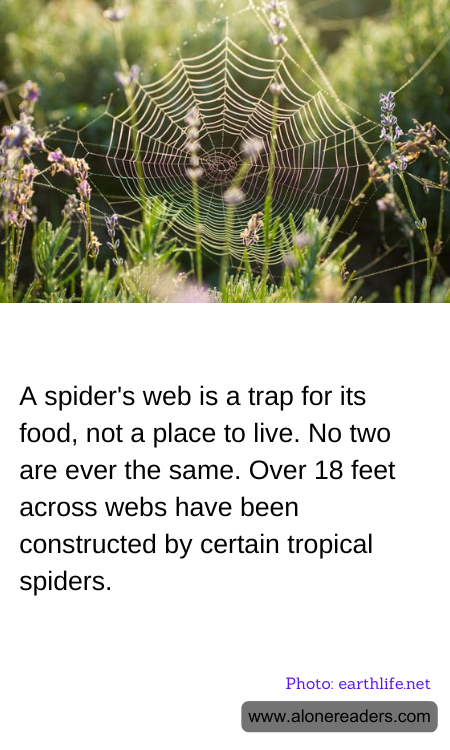
Spiders, often regarded as nature's skilled architects, create webs that are masterpieces of precision and efficiency, primarily functioning as traps for their unsuserved prey rather than as habitats. Each web is a unique construction, tailored by its creator to optimize success in capturing food. The diversity in web designs is vast, reflecting the adaptability and resourcefulness of spiders.
Among the thousands of spider species, each employs a distinct method and style of web-building that suits its environmental conditions and hunting needs. For example, the classic orb web, spun by orb-weaver spiders, is a wheel-shaped masterpiece designed to capture flying insects. On the other hand, some spiders, like the trapdoor spider, construct ground-level webs that surprise prey from below.
The size and scale of these webs can be astonishing. In tropical regions, where biodiversity is at its peak, spiders such as the Darwin’s bark spider spin webs that stretch more than 18 feet across rivers or between large trees. These massive webs are not just wonders of natural engineering but also demonstrate the spider's ability to exploit ecological niches where competition is less fierce, thereby maximizing their chances of a plentiful catch.
Spiders use silk, a protein fiber they produce themselves, which is renowned for its robustness, sometimes surpassing steel in strength relative to its weight. This silk allows spiders to engineer complex, intricate webs that can withstand both prey impact and environmental challenges like wind and rain.
However, despite being primarily traps, some spider webs do serve additional purposes. For instance, many spiders will hide or even reside temporarily in the corners of their webs, using them as sheltered spots for retreat. They might also recycle the silk or consume old webs before spinning new ones, demonstrating an intriguing level of resource conservation.
The ingenuity of spider webs, from their material properties to their architectural designs, not only highlights the complex intersection of biology and engineering in nature but also inspires advancements in materials science and robotics. By studying these natural blueprints, scientists and engineers can uncover secrets to creating more sustainable and efficient materials. Meanwhile, the diversity and adaptability of spider web designs underscore the beauty and complexity of nature’s own solutions to survival challenges.