More About This Card
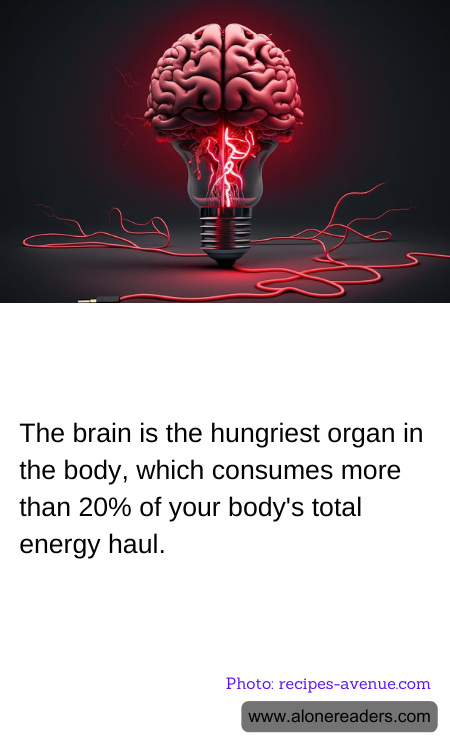
The brain, though it accounts for only about 2% of the body's weight, is an energy-hungry organ, consuming an astonishing one-fifth of the body’s total energy. This disproportionate energy consumption is crucial for maintaining various complex functions such as thought, memory, and coordination. The brain’s primary source of fuel is glucose, and it requires a constant supply to function effectively. Unlike other organs, the brain does not have the capacity to store energy and hence relies on a continuous blood flow to meet its metabolic needs.
The brain's energy is primarily used to maintain the electric potentials across the membranes of nerve cells, necessary for the generation and propagation of nerve impulses. This process involves transporting sodium and potassium ions across cell membranes, a task managed by sodium-potassium pumps, which are active transport mechanisms powered by ATP, the cell’s energy molecule. Each of these pumps consumes ATP rapidly, illustrating just one of the energy-expensive strategies the brain uses to maintain optimum performance.
The energy demands of the brain reflect its complexity and dynamism. For instance, the cerebral cortex, the outer layer responsible for higher-order functions like decision-making and problem-solving, is one of the most energy-consuming areas. During intense mental activities, the brain’s energy consumption can surpass the baseline levels significantly. This is partly why tasks that require concentration and mental effort can be physically exhausting, despite not involving strenuous physical activity.
Understanding brain energetics is not just an academic pursuit. It has real-world implications in nutrition and healthcare. For example, diets that affect blood sugar levels can have a noticeable impact on cognitive functions and mood stability. Conditions that disrupt blood glucose levels, like diabetes, can directly affect brain functions, contributing to the cognitive decline seen in diabetic patients. Similarly, during periods of fasting or low food intake, cognitive abilities can be compromised due to reduced glucose availability, underscoring the brain's reliance on a steady energy supply.
Moreover, insights into how the brain uses energy can help in understanding and managing neurological disorders. Conditions like Alzheimer’s and Parkinson’s disease have been linked to compromised energy metabolism within brain cells. Consequently, therapies that help boost or optimize brain metabolism could potentially slow the progression of such disorders.
In conclusion, the brain's voracious appetite for energy is a testament to its sophisticated and labor-intensive functions. Protecting and nurturing brain health through proper nutrition and understanding its energy requirements can lead to better overall health and improved neurological resilience. This organ's incredible demand for energy also underscores the importance of researching and understanding cerebral metabolism as a fundamental aspect of advancing human health and combating neurological diseases.