More About This Card
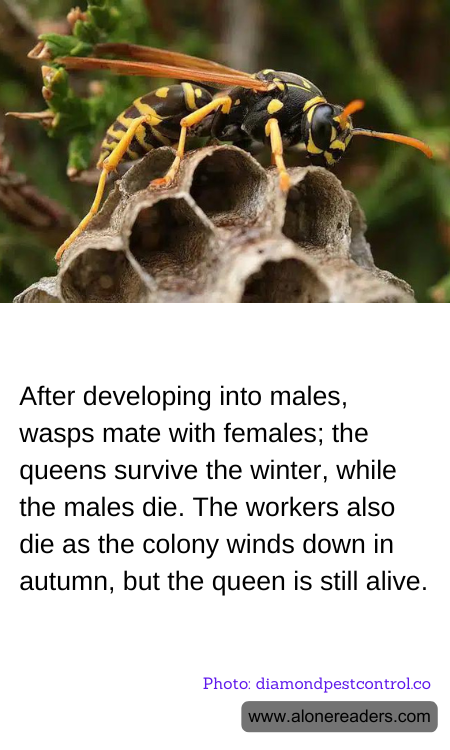
As the seasons change and autumn approaches, the cycle of life for wasps undergoes a critical transformation. In the life of these insects, mating becomes a central focus during the cooler months, primarily because it sets the stage for the survival of the next generation. Wasps are generally categorized into males, females, and workers, each playing distinct roles within their colony's lifecycle.
The males, after reaching maturity, have a primary role: to mate with the females, who are potential queens. This process is vital as it ensures that the queen will be fertilized and able to start a new colony the following spring. After fulfilling this crucial role, the males' lifecycle concludes, and they typically die off, their purpose served.
The workers, who are sterile females, are responsible for various duties within the wasp colony, such as building the nest, foraging for food, and protecting the colony. However, like the males, their lives are also closely tied to the seasonal cycle. As the cold weather sets in and resources become scarce, their duties wind down and their life cycle comes to an end. The end of the workers' activities signifies the beginning of the colony's decline during the autumn.
The queen, however, follows a different trajectory. After mating, she seeks a safe, secluded place to overwinter. This period of dormancy is crucial for her survival through the cold months when food sources are minimal and conditions are harsh. The survival of the queen is imperative, as she holds the future of a new colony in the spring. Her ability to endure the winter and emerge to establish a new colony ensures the continuation of her species.
In essence, the lifecycle of wasps is a fascinating example of nature’s rhythm and the roles that different beings play within it. Each class within the wasp colony, from the sacrificial males to the laborious workers and the enduring queen, has a specific purpose that contributes to the species' survival and regeneration each year. This cycle not only highlights the intricacies of wasp ecology but also sheds light on the broader patterns of life, death, and renewal that permeate the natural world.