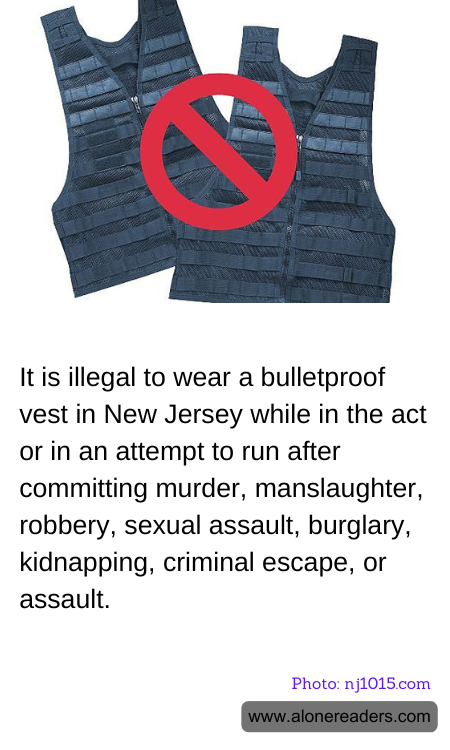
In New Jersey, an interesting and specific law exists concerning the use of bulletproof vests—a garment designed to absorb and reduce the impact of firearm projectiles and shrapnel from explosions. While wearing a bulletproof vest in itself is not illegal, the state has stipulations that render wearing one during the commission of certain crimes as escalating the severity of the offense. Specifically, under New Jersey law, it is illegal for an individual to wear a bulletproof vest while engaging in or attempting to flee after committing serious crimes such as murder, manslaughter, robbery, sexual assault, burglary, kidnapping, criminal escape, or assault.
This law aims to deter the use of body armor in the execution of violent crimes that threaten community safety and law enforcement efficacy. The rationale is that a bulletproof vest could embolden offenders, providing them with added protection against law enforcement officers, potentially escalating violent encounters and endangering police and civilians alike. The specific targeting of these crimes underscores a focus on reducing the additional risk posed when such protective gear is employed in high-stakes criminal situations.
Penalties for violating this law are severe, reflecting the serious nature of both the protective wear and the associated crimes. If found guilty, individuals face enhanced charges that compound the primary offense, leading to potentially longer sentences and greater fines. The presence of a bulletproof vest in these contexts is treated as an aggravating factor, signaling premeditation and a heightened threat to public safety.
This legal approach seeks not only to punish but also to preemptively reduce the risk of more heavily armored criminals on the streets. It’s a reflective measure of broader societal attempts to balance individual rights with public security, especially as concerns about gun violence and police safety remain prevalent. The intersection of legal, social, and ethical considerations surrounding the use of such defensive equipment in criminal acts highlights the complexities of modern law enforcement and criminal justice efforts in the face of evolving technologies and societal issues.
