More About This Card
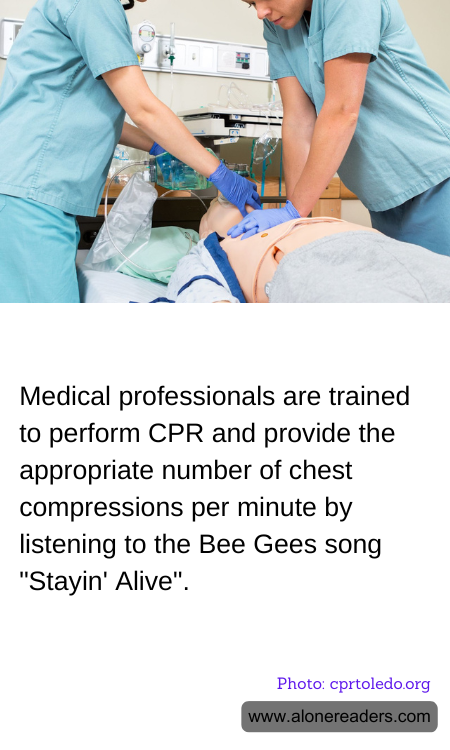
When it comes to saving lives, every second counts, especially in medical emergencies like cardiac arrest where the heart suddenly stops beating. CPR (Cardiopulmonary Resuscitation) is a crucial skill that can double or even triple a cardiac arrest victim's chance of survival if performed correctly. Medical professionals are meticulously trained to administer CPR correctly, which includes providing the right number of chest compressions per minute—a critical component of effective resuscitation.
Interestingly, the optimal rate for chest compressions during CPR is 100 to 120 compressions per minute, a rhythm that matches the tempo of several popular songs, including the Bee Gees' 1977 disco hit "Stayin' Alive." This song has a steady beat that helps guide rescuers to perform chest compressions at the correct pace. The American Heart Association along with several other health organizations have actually used "Stayin' Alive" in training materials to help teach this vital aspect of CPR. The song not only uplifts with its title—a nudge towards the goal of CPR—but its beat is a practical tool to achieve the recommended compression rate.
Using music as a guide is a method rooted in the fact that rhythm helps us regulate our physical actions. For a procedure as physically demanding as CPR, having a mental metronome of sorts helps ensure the consistency and adequacy of each compression. Beyond "Stayin' Alive," other songs across various music genres also match this lifesaving beat, including "Another One Bites the Dust" by Queen and "Crazy in Love" by Beyoncé. However, the ironical undertones of some titles may deem them less appropriate in the context of life-threatening situations.
Training with "Stayin' Alive" not only helps medical professionals maintain the right compression rate, it also serves as a mnemonic device, making the CPR process easier to recall under pressure. This method of training showcases an innovative intersection between medicine and music, harnessing the power of rhythm and song to enhance life-saving techniques. Despite the primary use in professional training, this approach has also been popularized in mainstream CPR training for the general public, making the procedure more accessible and memorable for people who might one day need to use it in an emergency.
While the concept might seem a bit lighthearted, its implications are serious, as maintaining the correct rate of chest compressions can significantly influence the effectiveness of CPR. Thus the use of "Stayin' Alive" is more than just a clever educational tool—it's a component of training that could genuinely tip the balance between life and death.