More About This Card
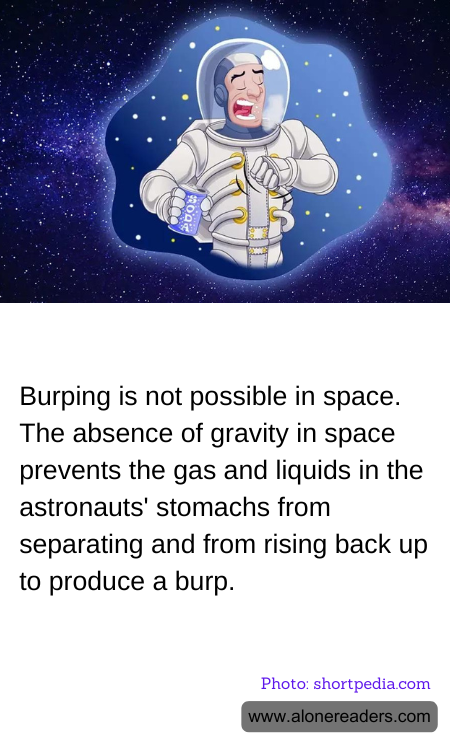
In the weightlessness of space, everyday actions like burping undergo surprising changes due to the unique environmental conditions. On Earth, gravity plays a crucial role in the digestion process. It helps separate solids and gases in the stomach; gases rise to the top and solids remain below. When you burp, it’s the release of this buildup of gas.
However, in the microgravity conditions of space, this separation does not occur as it does on Earth. Both liquids and gases in an astronaut's stomach mix into a kind of emulsion. As a result, if an astronaut tries to burp, they are likely to expel some liquid as well, which could not only be unpleasant but also potentially messy and hazardous given the confined and sensitive environment of a spacecraft.
This physiological difference has necessitated adjustments in both the diet and practices of astronauts to minimize discomfort or potential issues arising from gas buildup. NASA and other space agencies carefully design meals that are less likely to produce gas. Moreover, astronauts are trained to adjust their eating habits to help manage minor but potentially problematic matters such as gas during their missions.
The challenges of burping in space highlight a broader issue that astronauts face—how profoundly different and sometimes unexpected life can be outside Earth’s atmosphere. Every aspect of daily life, from sleeping to eating, requires reconsideration and adaptation to suit the space environment. Thus, even a simple burp is a reminder of the complex interplay between human biology and the physics of outer space, emphasizing the adaptability and ingenuity required to explore beyond our planet.