More About This Card
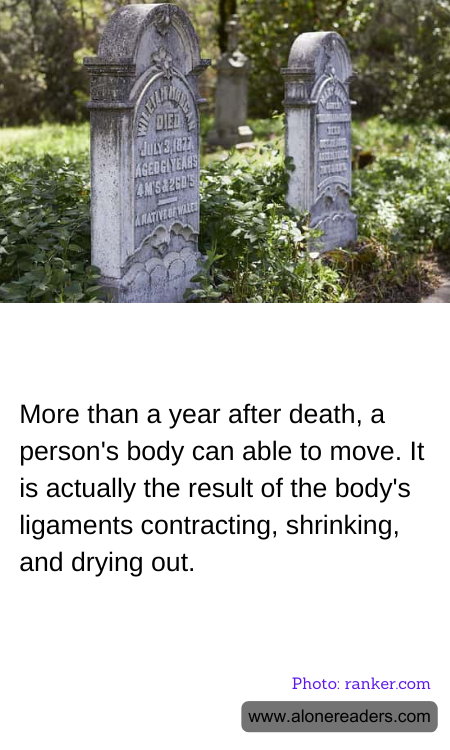
More than a year after death, the phenomenon of a body moving can indeed occur, though it's not movement in the sense that the living might understand. This peculiar activity arises not from any remaining life functions but rather from the natural processes that occur in decomposition. As unsettling as it may sound, these postmortem movements are primarily due to the ligaments contracting, shrinking, and drying out as a body decomposes.
After death, the human body undergoes a series of complex changes, beginning with rigor mortis, the temporary stiffening of muscles shortly after death. As this process wanes, the body enters a phase known as putrefaction, during which it begins to bloat and break down. It is during the later stages of decomposition, sometimes extending beyond a year, that the ligaments—which connect bones to other bones—begin to dry and contract. This can cause the limbs of the deceased to shift or jerk unexpectedly.
Researchers, including forensic scientists, have observed these movements during time-lapse photography in controlled environments where bodies are studied to understand the different stages of decomposition. Such observations can be crucial for forensic cases, helping to determine the time of death or the circumstances surrounding it. Moreover, understanding these movements can also prevent misinterpretations at crime scenes, where such natural processes might be mistaken for evidence of disturbance or foul play.
The idea of movement after death also touches on deeper, sometimes discomforting, reflections about human mortality and the nature of the body after life. In some cultures, these natural processes are incorporated into death rituals and beliefs about the afterlife. Nevertheless, from a scientific perspective, the movement of a deceased body due to contracting ligaments serves as a stark reminder of the fascinating, albeit sometimes macabre, intricacies of postmortem physiology.