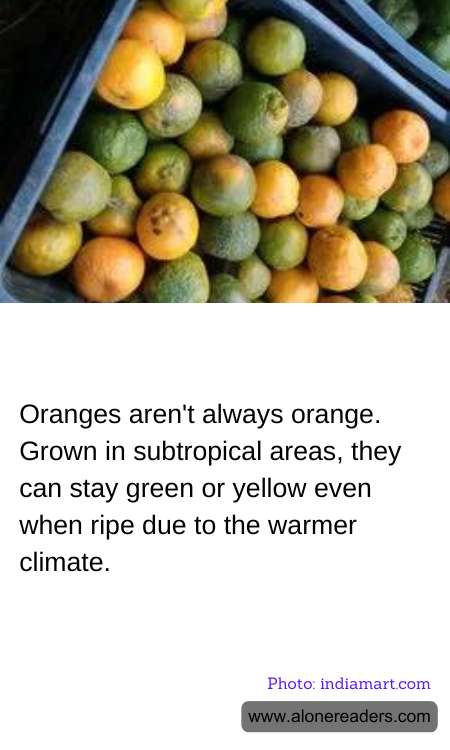
Many people associate the color orange with the fruit of the same name, but oranges can also be green or yellow when ripe. This variation in color largely depends on the climate in which the oranges are grown. In subtropical regions, where temperatures remain relatively warm throughout the year, oranges often retain their green pigmentation even after they have fully ripened. This phenomenon primarily occurs because the warmth inhibits the breakdown of chlorophyll, the pigment responsible for the green color in the skins of young oranges.
Chlorophyll is vital for oranges as they develop, aiding in photosynthesis by absorbing light primarily from the blue portion of the electromagnetic spectrum. However, in cooler climates, the chlorophyll in the peel breaks down as temperatures drop in the fall, leading to the orange color that most people are familiar with. This color change is also influenced by the production of carotenoids, pigments that provide the vibrant orange hue as the chlorophyll diminishes.
The misconception that green oranges are unripe may lead consumers to overlook them in markets where imported fruit is common. However, the color of an orange’s skin doesn’t necessarily reflect its sweetness or ripeness. Green oranges can be just as sweet, if not sweeter, than their orange-colored counterparts. The key indicators of ripeness in oranges are texture and firmness rather than color. A ripe orange should feel firm and heavy for its size, a sign that it is juicy and ready to be eaten.
These green oranges are common in tropical regions like parts of India, Thailand, Vietnam, and Mexico. In these areas, locals are accustomed to the green exterior and know to judge the fruit by its feel and taste rather than its color. For those not used to seeing green oranges, it might be surprising to learn that what might look odd in one part of the world is perfectly normal and expected in another.
Understanding these nuances is essential not just for appreciating global agricultural practices but also for reducing food waste. Educating consumers about the nature of such fruits can help prevent perfectly good, ripe oranges from being discarded simply because they do not meet a color expectation. This widened understanding can foster a more accepting and knowledgeable approach to the diverse ways in which fruit can look and taste, depending on where and how it is grown.
