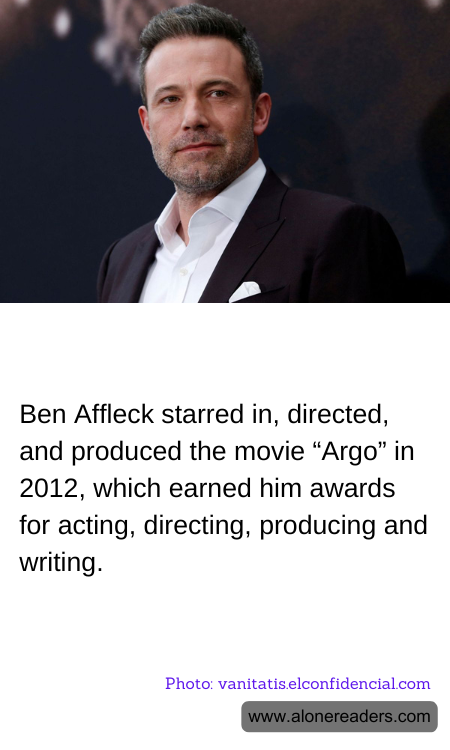
Ben Affleck's multi-faceted role in the 2012 film "Argo" solidified his position as a powerhouse in Hollywood, not just as an actor, but also as a director and producer. The film, which dramatizes the real-life CIA operation to rescue six American diplomats from Iran during the 1979-1981 hostage crisis, was both a critical and commercial success, widely praised for its thrilling narrative and historical accuracy.
Affleck's portrayal of Tony Mendez, the CIA operative who masterminded the daring escape, was lauded for its understated intensity and realism. However, it was behind the camera that Affleck truly shone. His direction skillfully balanced tension and humor, capturing the high stakes of the covert operation while also exploring the bizarre Hollywood angle used as a cover story for the mission. The direction was taut, keeping audiences on the edge of their seats even though the historical outcome was already known.
As a producer, Affleck demonstrated a keen eye for storytelling that doesn't shy away from complexity and nuance. He was instrumental in ensuring that the film was both entertaining and thought-provoking, presenting a piece of relatively recent history in a way that was accessible to a wide audience. His efforts did not go unnoticed, as "Argo" earned him several prestigious accolades, including the Academy Award for Best Picture, BAFTA Award for Best Film, and Golden Globe Award for Best Director, among others.
Despite some critics pointing out historical inaccuracies and oversimplifications—common criticisms in historical dramatizations—Affleck was also recognized for his role in the film's writing, although he was not the lead screenwriter. The screenplay by Chris Terrio, which Affleck helped produce and shape, won the Academy Award for Best Adapted Screenplay, further testament to the solid storytelling foundation upon which the film was built.
In the end, "Argo" not only marked a significant point in Ben Affleck’s career, showing his growth and maturity as a filmmaker, but it also left an indelible mark on the landscape of historical political thrillers, demonstrating the power of cinema to delve into complex, risky topics with vigor and sharpness.
