More About This Card
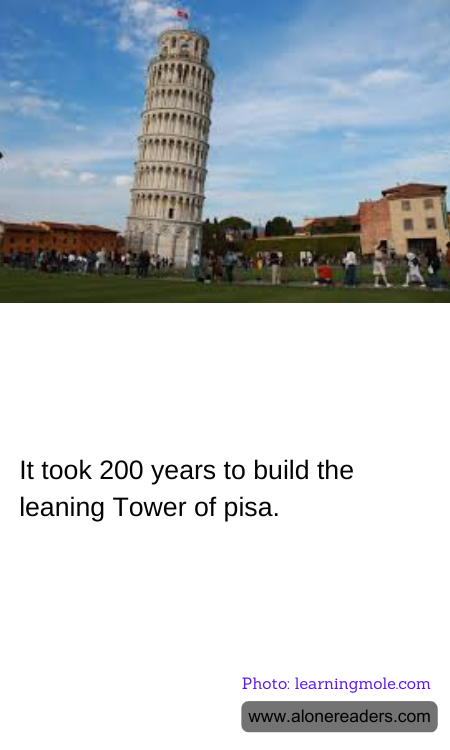
The Leaning Tower of Pisa, one of the most remarkable architectural structures from medieval Europe, has intrigued and puzzled millions of people around the world. Notably, it took nearly 200 years to build the tower, a process marked by interruptions and challenges that contributed to its famous tilt. Construction of the tower began in 1173 under the direction of architect Bonanno Pisano. It was envisioned as a freestanding bell tower for the nearby cathedral in the Pisa complex known as the 'Field of Miracles'.
The tower's foundation was laid on soft subsoil, which was unstable and began to settle unevenly by the time builders started adding the third story in 1178. Construction was halted for almost a century, in part because of ongoing wars with Genoa, Lucca, and Florence. This unintended pause allowed the soil beneath the tower to settle and compact, which likely prevented its early collapse.
Construction resumed in 1272 under Giovanni di Simone, who tried to compensate for the tilt by adding more floors with one side taller than the other. This only made the tilt more pronounced. By 1319, the seventh floor was completed, and the bell-chamber was finally added by Tommaso di Andrea Pisano in 1372, completing the structure. The tower's construction phase thus extended over a span of 199 years, a timeline reflecting both the complexity of its design and the challenges posed by the geological conditions.
Over the centuries, the tilt increased, prompting numerous efforts to stabilize the structure and prevent a catastrophic collapse. These efforts included adding reinforcements, extracting soil from beneath the higher side, and counterweighting the lower side. The most critical intervention came between 1993 and 2001, when engineers temporarily added lead counterweights and extracted soil, successfully stabilizing the tilt for the first time in its history.
Today, the Leaning Tower of Pisa is not only a testament to the ambitions of medieval architects but also an enduring symbol of resilience. Despite its precarious lean, it has survived wars, earthquakes, and the very subsidence that gave it its unique inclination. It stands as a monument to both human ingenuity and the unpredictable power of nature, attracting visitors from around the globe who marvel at its complex history and striking beauty.