More About This Card
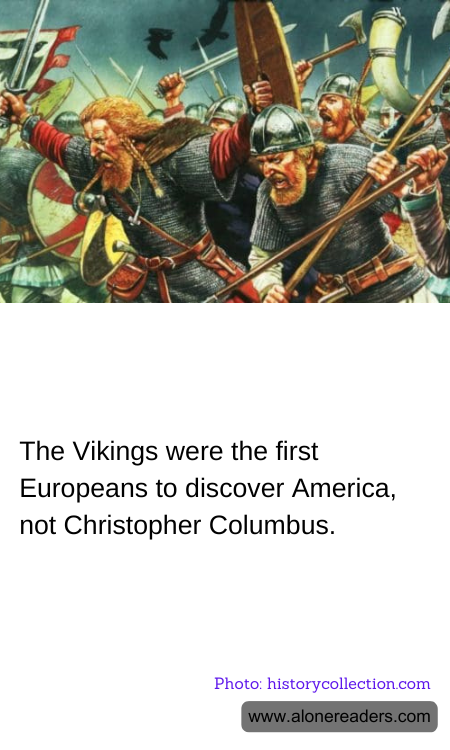
Centuries before Christopher Columbus sailed the ocean blue in 1492, a group of intrepid explorers from Europe had already set foot on the shores of the New World. These were the Norse explorers, better known as Vikings, originating from Scandinavia—present-day Norway, Sweden, and Denmark. The most famous of these Viking explorers was Leif Erikson, who, according to Norse sagas, led an expedition to North America in the early 11th century.
The evidence supporting the presence of Vikings in North America is supported by archaeological findings and Norse sagas—stories passed down through generations that mix history and mythology. The most compelling archaeological evidence was discovered in 1960 by Norwegian explorer Helge Ingstad and his wife, archaeologist Anne Stine Ingstad. They uncovered a Norse settlement at L'Anse aux Meadows on the northern tip of Newfoundland, Canada. This site, which dates back to around 1000 AD, contains the remains of Norse-style buildings and artifacts directly linked to Scandinavian cultures.
Unlike Columbus, who believed he had reached Asia, the Vikings appear to have understood that they had found a new and previously unknown land. The sagas refer to lands called Vinland, which was described as a place where wild grapes and salmon were abundant, and Markland, a land of forests, likely on the North American coast. These accounts align with the characteristics of the regions around Newfoundland and give credence to the sagas as historical documents.
The Vikings, however, did not establish long-lasting colonies in North America. Frequent conflicts with indigenous peoples, whom the sagas refer to as Skrælings—possibly involving multiple groups including the ancestors of modern Inuit and Indigenous peoples of the northeast—combined with the challenges of navigating and maintaining supply lines across the North Atlantic, likely contributed to their inability to hold onto these distant outposts.
Nevertheless, the realization that the Vikings reached America long before Columbus challenges the traditional narratives of the discovery of the Americas. It not only highlights the daring and navigational skills of the Vikings but also prompts a reevaluation of the historical interactions between Europe and the Americas. Even though Columbus' voyages undoubtedly had a more significant and lasting impact on history, particularly in their consequences for the indigenous populations of the Americas, acknowledging the Vikings' explorations gives a fuller picture of the complexities surrounding the European discovery of the New World.