More About This Card
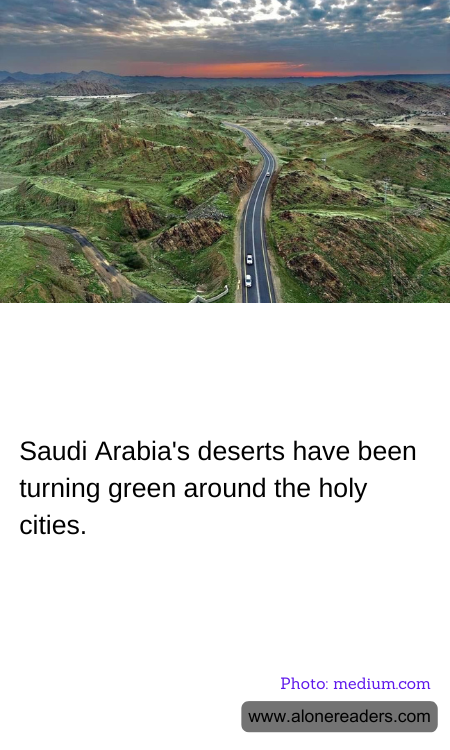
Saudi Arabia, primarily known for its vast and arid deserts, has been witnessing a remarkable transformation, particularly around its holy cities. The deserts are turning green, showcasing an intriguing blend of natural change and focused human effort.
This greening phenomenon is largely attributed to comprehensive agricultural policies and innovative water management strategies implemented by the Saudi government. Spearheaded by the ambitious Saudi Vision 2030, the initiative seeks to diversify the economy away from oil dependence and enhance the quality of life by investing in sectors like tourism, recreation, and agriculture.
Advanced irrigation techniques, such as drip and sprinkler systems, have been utilized to optimize water usage, a critical resource in such an arid landscape. Moreover, the kingdom has been exploring sustainable practices such as the use of treated wastewater for irrigation. This not only conserves freshwater but also repurposes waste effectively.
Beyond practical strategies, there is also a symbolic significance to these changes, particularly around the holy cities of Mecca and Medina. The green belts can potentially provide a serene setting that enhances the pilgrimage experience for millions of visitors each year. Additionally, these green spaces help in reducing dust and sandstorms, which are common in desert areas.
The vegetation cover also helps in moderating the local climate. The increase in green areas around these cities has been found to lower temperatures in what are some of the hottest parts of the country. Trees and plants naturally help in reducing carbon dioxide levels which in turn has broader implications for battling global warming.
However, the transformation of desert into green landscapes does raise environmental concerns. The alteration of land can impact local ecosystems and biodiversity. There is a delicate balance to be maintained between greening efforts and the preservation of the desert's natural state which has existed for millennia.
Moving forward, it will be crucial for Saudi Arabia to continue to find innovative and environmentally sustainable methods to expand its green spaces, especially considering the likely increase in population and pilgrims in the coming decades. With careful management and respect for both the environment and the cultural significance of the area, the greening of Saudi Arabia’s deserts around its holy cities can serve as a positive model for desert countries worldwide.