More About This Card
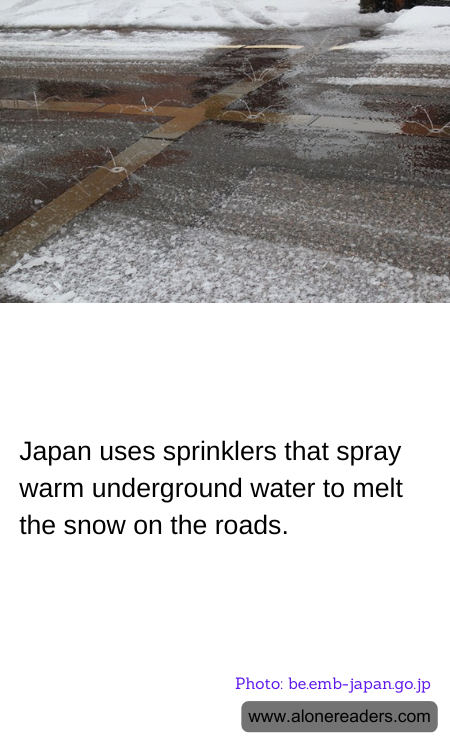
In Japan, a country renowned for its innovation and practical application of technology, combating heavy snowfall has led to the adoption of an ingenious method: using sprinklers to spray warm underground water onto roads, thereby melting the snow. This approach not only aids in keeping the roads clear during the winter months but also utilizes a natural resource that might otherwise remain untapped.
This system, primarily used in regions that are heavily affected by snow, involves extracting geothermally heated water from beneath the earth’s surface. Japan's geological position on the Pacific Ring of Fire makes it rich in geothermal resources, a fact that has facilitated the implementation of this method. The warm water is then sprayed through a series of sprinklers and pipework, strategically installed alongside or beneath the roadway. As the warm water hits the cold surface, it melts the snow and ice, preventing accumulation and easing the burden on regular snow removal services.
The benefits of using geothermal water for snow melting are notable. Firstly, it reduces the need for chemical deicers, which can be harmful to the environment. Chemicals often run off into nearby waterways, affecting aquatic life and water quality. By using naturally heated water, the impact on the environment is significantly lessened. Secondly, this method can be more energy-efficient compared to other snow removal methods that require mechanical plowing and hauling. It offers a sustainable way to keep roads operational during severe winter weather, enhancing safety and reducing traffic disruptions caused by snow and ice.
Moreover, as global attention increasingly turns towards sustainable practices, Japan’s utilization of its geothermal resources for such practical purposes offers a model for other countries with similar geographic and climatic conditions. It showcases how leveraging local natural resources can lead to innovative, eco-friendly solutions to everyday problems.
However, while the benefits are clear, the system also has its challenges. The initial setup and maintenance of the infrastructure required to pump and spray the water can be costly and technologically demanding. There is also the question of scalability and how to implement such a system in areas where geothermal resources may not be as readily available or economically feasible.
Despite these challenges, Japan's method of using warm underground water to melt snow on its roads stands as a testament to creative problem-solving. It not only underscores the country's commitment to innovative, sustainable technologies but also serves as a potential blueprint for other nations looking to harness their natural resources to tackle similar environmental challenges.