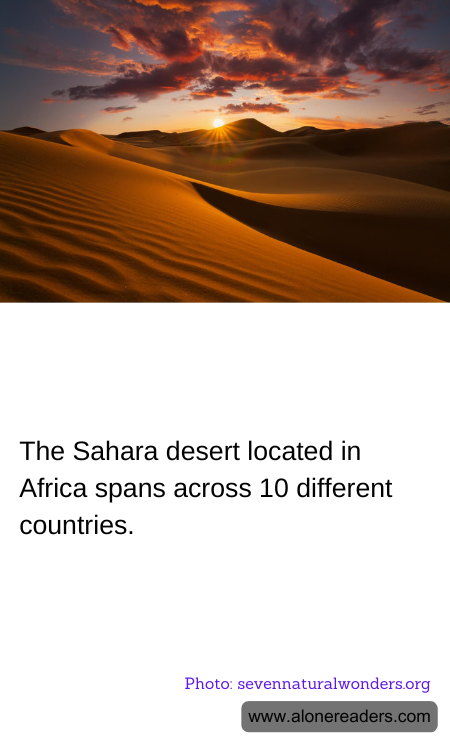
Spanning approximately 9 million square kilometers, the Sahara Desert is not just the largest hot desert in the world but also a significant geographical landscape that stretches across ten different countries in Africa. This vast desert covers large parts of Algeria, Chad, Egypt, Libya, Mali, Mauritania, Morocco, Niger, Sudan, and Tunisia. Each of these countries shares a piece of the diverse and extreme ecosystem that characterizes the Sahara.
The Sahara is known for its harsh environmental conditions, with daytime temperatures that can soar above 50 degrees Celsius (122 degrees Fahrenheit) in the summer and drop significantly at night. Despite these extreme conditions, the Sahara is not devoid of life. It hosts a variety of flora and fauna that have adapted to the arid climate. Typical wildlife includes the fennec fox, addax antelope, Saharan cheetah, and various reptiles and arthropods. The desert is also home to approximately 2.5 million people, including the Tuareg, Berbers, Bedouins, and other nomadic tribes who have historically navigated this inhospitable landscape.
The Sahara also plays a crucial role in influencing the climate of the region and beyond. For instance, it impacts rain patterns across the West African region and even contributes to the fertility of the Amazon Rainforest through the transatlantic journey of Saharan dust.
Culturally and historically, the Sahara has been a stage for trade and exchange among diverse peoples. Ancient trade routes once facilitated the exchange of goods like gold, salt, and ivory, as well as ideas and culture between sub-Saharan Africa and the Mediterranean and Middle Eastern world. Remnants of these rich interactions are evident in the rock paintings and archaeological sites scattered across the desert.
In recent years, the Sahara has also been at the center of geopolitical interests and environmental issues. Challenges such as desertification, which threatens the livelihoods of the inhabitants and the surrounding ecosystems, and political instability in the region highlight the complexity of managing and preserving this vast, rugged terrain. Moreover, the Sahara's potential for renewable energy production, particularly solar energy, presents opportunities for sustainable development amidst global shifts toward greener energy solutions.
The Sahara Desert is indeed more than just a vast expanse of sand; it is a place of historical significance, ecological importance, and cultural richness, playing a crucial role in the lives of the people and the environments of not just the ten countries it spans but also the world at large.
