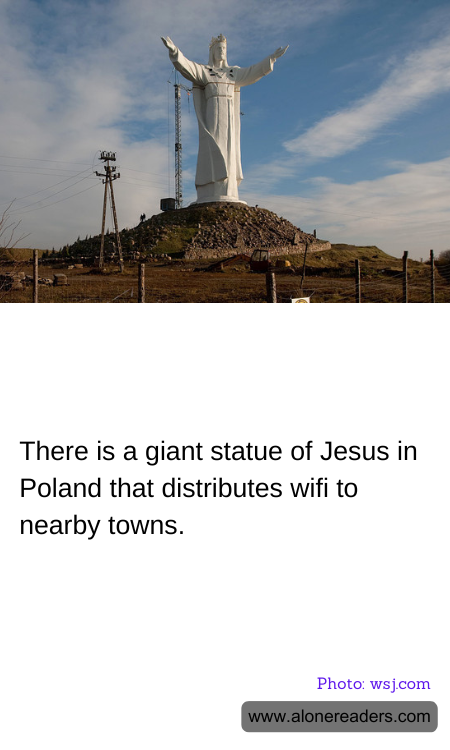
In the small town of Swiebodzin, Poland, a monumental statue of Jesus not only stands as a symbol of faith but also serves a functional purpose by providing Wi-Fi to the local community. Nicknamed "Christ the King," this statue is recognized not only for its spiritual significance but also for its unique blend of religion and modern technology. Erected in 2010, the statue towers at an impressive height of 36 meters (118 feet), making it one of the tallest statues of Jesus in the world. The figure itself is 33 meters high, which represents every year of Jesus' life, perched atop a 3-meter tall crown-shaped pedestal.
The idea to equip the statue with Wi-Fi capabilities was seen as an innovative approach to integrate technology with faith, aimed at serving the local populace in more ways than one. This unusual feature allows local residents and visitors to stay connected, whether for practical purposes or to enhance their spiritual experience at the site. The Wi-Fi from the statue is said to emanate from antennas located within the crown of Jesus, a fitting metaphor for a message of connectivity and reach spreading outward from a spiritual center.
The project, spearheaded by local clergy, not only positions Swiebodzin as a noteworthy pilgrimage site but also embeds it more deeply into the daily lives of the townspeople. This dual-purpose use of the statue reflects a broader trend of using religious sites to provide community services, thereby increasing their relevance in modern society.
Moreover, the presence of such a technologically equipped statue can be seen as a reflection of the evolving relationship between tradition and modernity. While some may find the incorporation of technology into a religious monument unconventional, others view it as a meaningful way to meet the needs of the contemporary community while preserving religious heritage.
Ultimately, the WiFi-distributing statue in Swiebodzin is a vivid example of how community landmarks can play multiple roles, encouraging not just spiritual reflection and pilgrimage but also offering practical assistance to the local community. This blending of the spiritual with the practical underscores a unique storyline in the narrative of modern religious practice and public service, marrying the old with the new in a mutually beneficial embrace.
