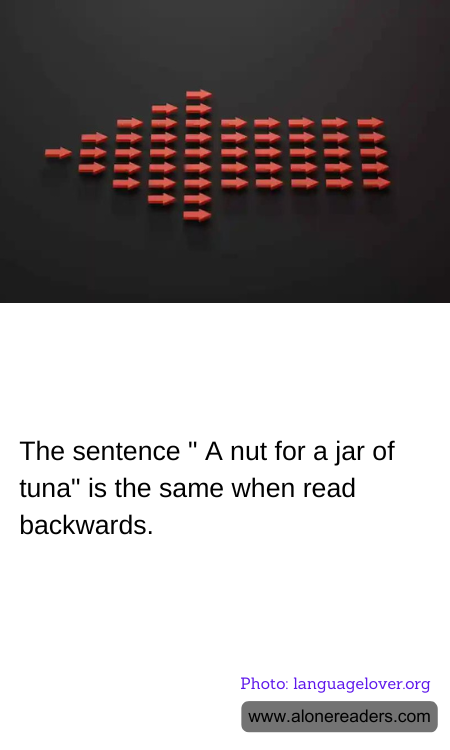
Palindromes are fascinating linguistic phenomena where a word, phrase, or sentence reads the same backward as forward. The sentence "A nut for a jar of tuna" exemplifies this beautifully. This perfectly symmetrical arrangement of words creates a mirror image in its spelling and sequence, capturing the essence of palindrome sentences. These types of sentences are more than just linguistic curiosities; they delve into the realms of puzzle-making and cryptography, offering both amusement and a mental challenge.
The creation of such sentences requires a keen eye for language and a creative manipulation of words and their meanings. This particular sentence not only maintains its symmetrical spelling but also surprisingly maintains a coherent, albeit quirky, meaning. The sentence involves a seemingly straightforward transaction involving an unspecified "nut" and a jar of tuna, which adds a layer of surreal humor when one considers the practical implications of such an exchange.
The allure of palindromes like "A nut for a jar of tuna" also extends into art and literature, where they are used to add a layer of complexity and intrigue. Authors and poets play with palindromes to lend a sense of symmetry and balance to their works, sometimes embedding secret messages or emphasizing particular themes. In visual arts, palindromes might inspire patterns or compositions that reflect symmetry and balance, much like the literary form.
Moreover, palindromes can be found across various languages and cultures, highlighting a universal human appreciation for word play and symmetry. The construction of a palindrome in different languages showcases the flexibility and unique aspects of language structure, making it an interesting study for linguists and language enthusiasts alike.
In educational contexts, palindromes like "A nut for a jar of tuna" are also utilized as effective tools to engage students with language and cognitive skills. They provide a fun way for students to explore language, learn about spelling, and develop pattern recognition skills.
Overall, the charm of palindrome sentences lies in their ability to combine linguistic skill with creativity and wit. "A nut for a jar of tuna" stands as a testament to the playful ingenuity that language can afford, providing entertainment and reflection in equal measure. Whether in literature, art, or casual amusement, the beauty of palindromes resonates through their symmetry and the intellectual joy they offer to those who ponder them.
