More About This Card
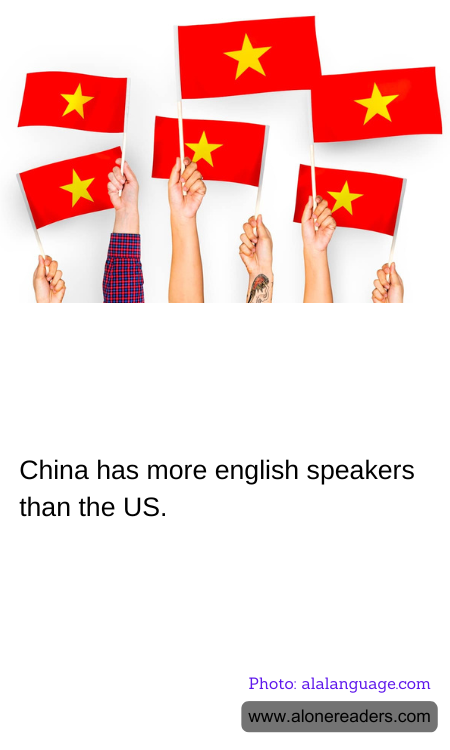
China, with its vast population of over 1.4 billion people, presents many surprising statistics, but one that often catches the ear is the claim that there are more English speakers in China than in the United States. While at first glance this might seem plausible given the sheer numbers, a closer examination into what constitutes an "English speaker" and the varying levels of proficiency involved, adds layers of complexity to this assertion.
The United States, with a population of about 330 million, predominantly speaks English. The language is ingrained in every aspect of daily life, government, and business, ensuring that the majority of the population possesses a high level of English proficiency. In contrast, while a significant number of people in China have learned or are learning English, the levels of proficiency vary widely, from elementary to fluent speakers.
English has become increasingly important in China due to globalization and the country's expanding role in international affairs. It is taught from a young age, beginning in primary school, and continues to be a major component of the curriculum through secondary school and even university. The Chinese government has promoted English proficiency to help facilitate business and diplomatic goals, recognizing the language as a key tool in global communication.
Despite these efforts, the proficiency level among English speakers in China predominantly leans towards basic conversational skills, which are taught to handle simple communication in international contexts. More advanced fluency, which includes a deep understanding of idiomatic and cultural nuances carried in the English language, is less common and generally found among individuals who have had extensive education in English, lived in English-speaking countries, or work in environments where English is frequently used.
Furthermore, quantitative comparisons are inherently tricky due to differing definitions of what it means to be an English speaker. Does a basic ability to communicate, perhaps with some difficulty, qualify someone as an English speaker? Or should the definition be reserved for those with a more mastered proficiency? Such questions highlight the complexities of language statistics.
While it's conceivable based on population dynamics alone that the number of people in China who have some proficiency in English could surpass the total population of the United States, it's crucial to differentiate between the ability to communicate minimally and the ability to use the language with full professional proficiency. Hence, while it might sound compelling to say that "China has more English speakers than the US," the reality is nuanced, reflecting not just numbers but varying degrees of command over the language. Therefore, while the numbers may suggest one story on the surface, the underlying linguistic competencies paint a more textured picture of English usage in China compared to the United States.