More About This Card
Cruise ships, those floating resorts synonymous with fun and relaxation, invariably come equipped with a range of facilities to cater to every contingency. Among the lesser-known, but essential features of these ships are their onboard morgues. Due to the extended periods that ships spend at sea, combined with the varied demographics of passengers, it is a practical necessity for cruise liners to be prepared for all eventualities, including deaths.
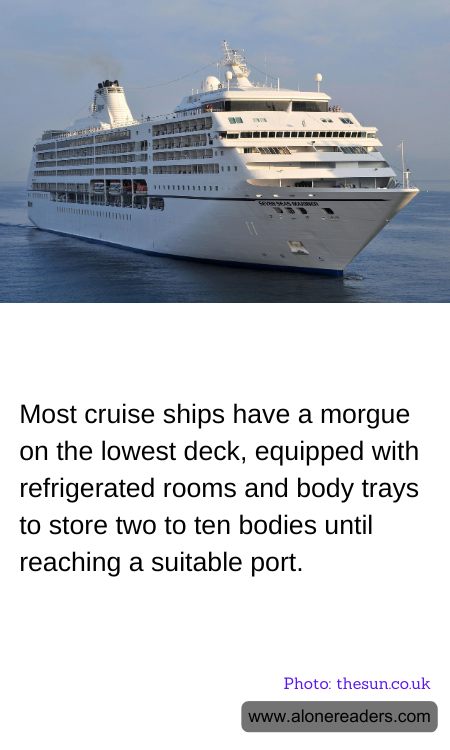
Typically located on the lowest decks, these morgues are designed with functionality and discretion in mind. Cruise ship morgues are equipped with refrigerated rooms that can hold between two to ten bodies, depending on the size of the ship. This capability ensures that the deceased can be preserved respectfully until the ship reaches a port where repatriation arrangements can be made. The existence of these facilities also addresses public health requirements, maintaining a safe and hygienic environment for passengers and crew.
Handling the situation with sensitivity is paramount. When a death occurs, trained crew members manage the situation discreetly to minimize distress to other passengers. The process is handled with utmost respect and efficiency, with protocols strictly adhered to in order to comply with both the laws of the port under whose jurisdiction the death occurred and international maritime law.
Communication with the family of the deceased is handled with care, offering support and assistance in dealing with the logistical and bureaucratic challenges that can arise when a death occurs in international waters. The cruise line typically works in partnership with local authorities and international embassies to facilitate the necessary paperwork and transportation arrangements.
While it is a feature most passengers will never see and hope never to need, the presence of a morgue on a cruise ship is a critical component of maritime operations. It reflects the reality of running a floating city, ensuring that cruise lines are equipped to handle all aspects of human life, even its end. This preparation helps ensure that all passengers, no matter the circumstances, are accorded dignity and care.