More About This Card
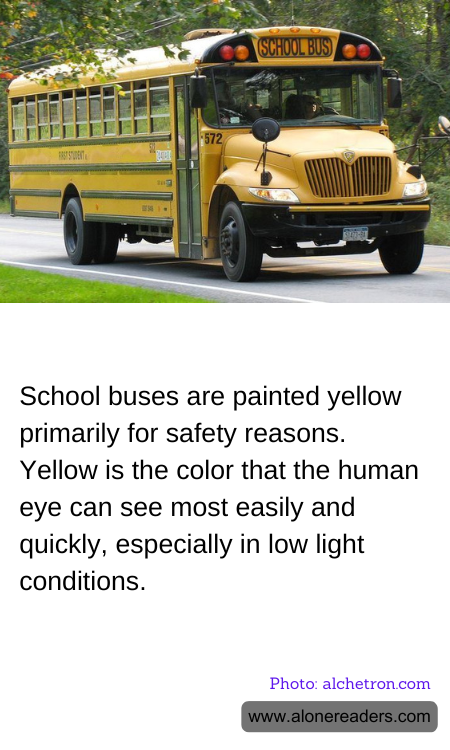
The iconic yellow color of school buses isn't just a bright and cheerful choice, it's primarily for the safety of the children and other road users. The specific shade, often referred to as "National School Bus Glossy Yellow," was deliberately chosen for its high visibility. This color is recognizable and visible from a great distance and under different light conditions, making it easier for drivers to notice the bus in the early morning light, during the fog, or even in the twilight hours.
Yellow naturally stands out in the peripheral vision quicker than any other color. Studies have indicated that the human eye processes yellow faster than other colors because it stimulates the cones in the eye responsible for detecting green and red light. By processing these colors quickly, our brain perceives yellow faster. This swift recognition is crucial when it comes to moving vehicles on busy streets, where reaction time can be a key factor in preventing accidents.
The color yellow was officially designated for all school buses in the United States in 1939 after being proposed by Dr. Frank Cyr, a professor at Columbia University. He organized a conference that established national school bus construction standards, including the uniform color. Prior to this standardization, school buses were painted different colors depending on the district, leading to inconsistencies in safety measures.
Moreover, the contrast of the black lettering against the yellow background makes it easy to read 'SCHOOL BUS' signs from a distance, further enhancing its visibility and the quick recognition by other drivers. Additionally, the bright yellow color immediately alerts drivers that they need to be cautious – children might be boarding or alighting the bus, potentially crossing the road.
The use of this particular yellow on school buses has since become a critical aspect of road safety strategies aimed at protecting students. Oversized red stop signs and flashing lights complement the yellow color, ensuring that the buses not only grab attention but also clearly communicate to other road users when they need to stop and give way. These combined features remind everyone on the road to follow traffic laws around school buses and contribute to a safe environment for students commuting back and forth from school.
In sum, the yellow color of school buses serves a vital function far beyond aesthetics. It's a carefully chosen tool to ensure the safety of young passengers and to alert other road users effectively, proving that thoughtful design and standardization can play crucial roles in public safety.