More About This Card
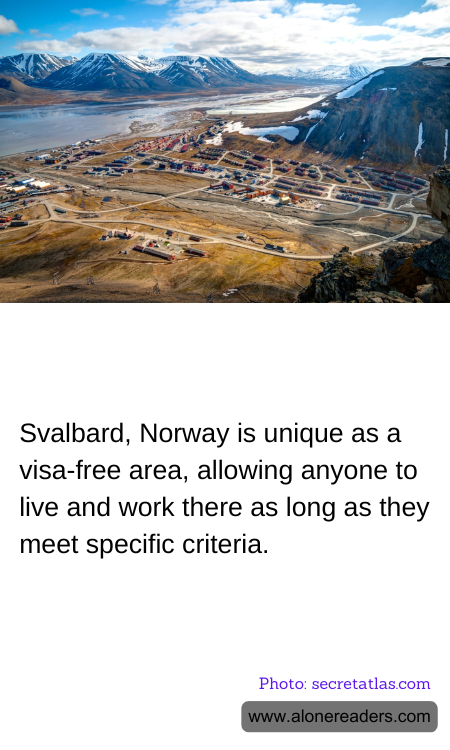
Svalbard, a Norwegian archipelago located in the Arctic Ocean, is an intriguing region with a distinctive legal and administrative status, which includes a unique visa-free policy. Unlike mainland Norway or any other part of Europe, Svalbard does not require any visa for people to enter, live, or work, regardless of their nationality. This unique arrangement stems from the Svalbard Treaty of 1920, which recognized Norwegian sovereignty over the archipelago but also assured that citizens and companies of all signatory countries could engage in commercial activities there on equal terms.
The primary stipulation for residing in Svalbard is that individuals must be able to support themselves financially. The local economy revolves mainly around coal mining, tourism, and research. For those looking to live there, securing employment or establishing a business is crucial, as there are no social welfare benefits available to residents. This means that without a job or some form of steady income, living in Svalbard can be particularly challenging.
Despite its remote location and harsh climatic conditions, Svalbard attracts a diverse population drawn by its mystic landscapes, unique wildlife, and the possibility of witnessing phenomena like the midnight sun and the northern lights. The archipelago also serves as an international platform for Arctic research, with the Svalbard Global Seed Vault and various scientific stations playing critical roles in global and environmental studies.
Moreover, individuals looking to relocate to Svalbard must also be prepared for the extreme Arctic climate and the isolation that comes with it. Longyearbyen, the largest settlement on the island, offers basic amenities such as a supermarket, schools, and a hospital, but options are limited, and costs are relatively high due to the logistics of transporting goods.
In essence, while the visa-free status of Svalbard provides a unique opportunity for those seeking an unconventional lifestyle or adventure, it also demands thorough preparation, self-sufficiency, and a willingness to adapt to the austere conditions of the Arctic. Thus, the allure of living in such a unique, visa-free environment comes with significant responsibilities and challenges.