More About This Card
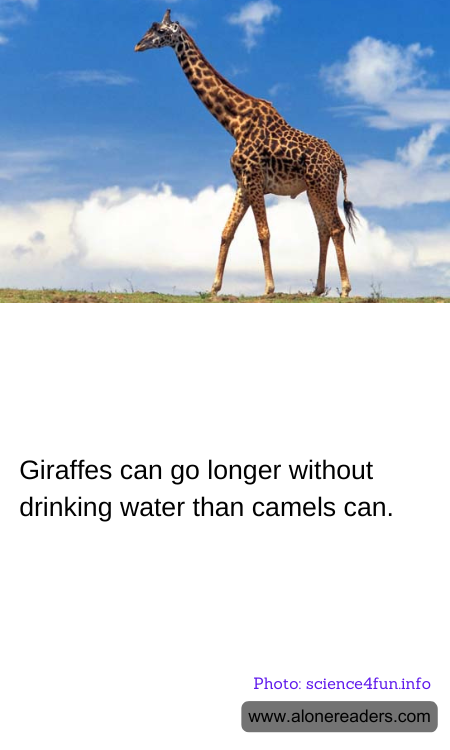
Giraffes, often recognized as the tallest mammals on Earth, have a unique biology that allows them to survive for extended periods without drinking water, surpassing even camels in this remarkable survival trait. This ability is particularly advantageous given their natural habitat: the arid and semi-arid ecosystems of sub-Saharan Africa.
The giraffe's water conservation skills are partly due to its diet. Giraffes primarily feed on the leaves of acacia trees, which contain a significant amount of water and provide much of the hydration they need. The efficiency of their digestive systems also plays a crucial role. Giraffes are ruminants, like cows, meaning they have a multi-chambered stomach that aids in maximizing nutrient extraction and moisture from their food. This adaptation reduces their need to drink on a daily basis.
Furthermore, the physiological makeup of giraffes contributes to their ability to conserve water. Their long necks, contrary to popular belief, do not facilitate frequent drinking; rather, the height at which their heads are normally positioned makes the act of bending down to reach water quite cumbersome and vulnerable to predators. As such, giraffes have developed the ability to sustain themselves by producing highly concentrated urine and dry feces, minimizing water loss.
In comparison, camels, which have famously been celebrated for their ability to endure without water, store fat in their humps which can be converted into water through metabolic processes. Although this allows them to survive for weeks without water, giraffes can manage similarly long periods due to their efficient use and conservation of water derived from their food intake.
The giraffe's remarkable adaptation to its environment is a splendid example of nature’s ingenuity. Like camels, giraffes embody the extraordinary resilience of wildlife in harsh climates, but they manage their hydration needs in a significantly different way based on their unique anatomical and physiological characteristics. This not only minimizes their need to compete for scarce water resources but also helps them thrive in the savannas and woodlands of Africa where water can often be a limited commodity. Such adaptation ensures their survival in the challenging ecosystem where they reside, showcasing an exceptional example of evolutionary innovation.