More About This Card
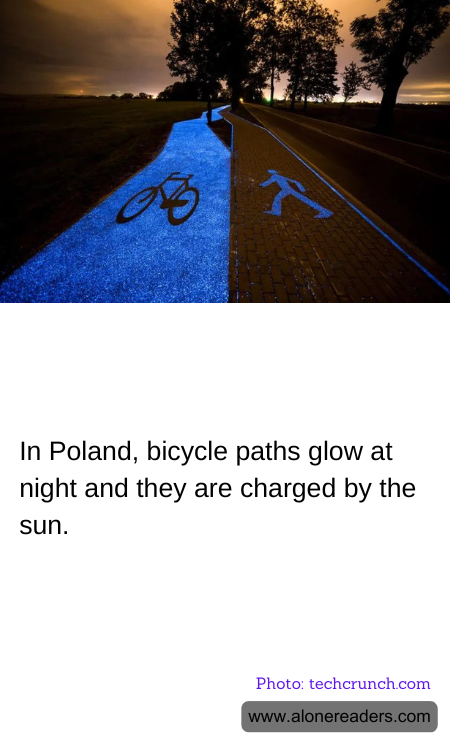
Poland has taken an innovative step towards enhancing road safety and aesthetic appeal by introducing glow-in-the-dark bicycle paths that charge under the sun. This technological advancement not only promotes ecological transport methods but also ensures cyclists' safety during nighttime. The photoluminescent particles absorb sunlight during the day and emit a bright, blue glow after dusk, lasting for up to 10 hours. This sustainable initiative firstly appeared near Lidzbark Warminski in the Mazury region, capturing the attention of both local and international communities.
The concept behind these glowing bike paths was inspired by Studio Roosegaarde’s Starry Night bike lane in the Netherlands, yet the Polish design is based entirely on solar-powered technology. The material used is synthetic, engineered to provide optimal light output and durability against harsh weather conditions. Moreover, the luminous pathways are meant to be low-maintenance and have a significantly longer lifespan compared to traditional lighting systems, which require complex electrical installations and regular maintenance.
One of the most significant benefits of these glowing paths is the enhancement of public safety. By brightly lighting the way, they reduce the risk of accidents involving cyclists at night, a common concern in areas with insufficient street lighting. Additionally, these paths encourage cycling as a viable and safe mode of transportation during all hours, potentially increasing physical activity among community members.
The aesthetic quality of the glowing paths also adds a magical element to Poland's landscapes, transforming mundane bike rides into enchanting experiences. This approach not only supports practical functionality but also boosts tourism, as cyclists are drawn to these visually striking attractions.
With environmental concerns becoming increasingly pressing, Poland's glowing bicycle paths represent a merging of functionality, safety, and eco-friendliness. They demonstrate how innovative thinking can lead to sustainable solutions that address multiple issues simultaneously: reducing carbon footprints by encouraging cycling, cutting down energy usage through solar power, and enhancing safety and beauty in urban and rural landscapes. As this technology evolves, it could potentially be implemented in various other parts of the world, promoting a global shift towards more sustainable urban planning and design.