More About This Card
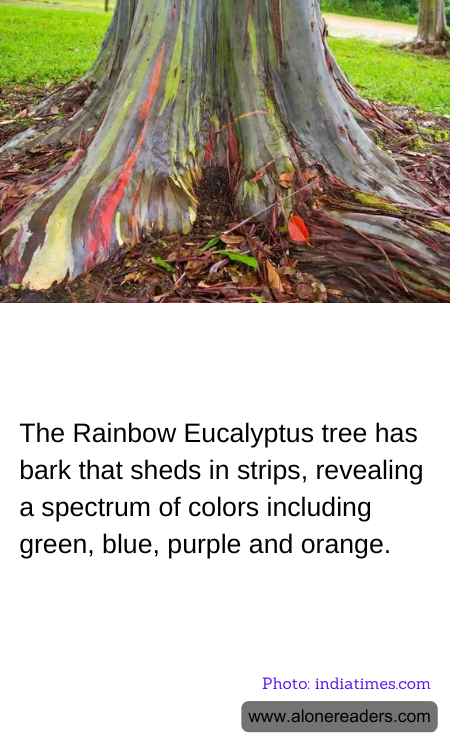
The Rainbow Eucalyptus, scientifically known as Eucalyptus deglupta, stands out in the world of trees with its remarkable multi-colored bark. Native to the Philippines, Indonesia, and Papua New Guinea, this tree has adapted to thrive in tropical forests and has garnered worldwide popularity due to its unique and vibrant appearance. The beauty of the Rainbow Eucalyptus can be attributed to a unique natural process involving the periodic shedding of its bark.
Unlike other trees, the bark of the Rainbow Eucalyptus peels away in large strips at different times, revealing a bright green layer underneath. This fresh green bark gradually matures and passes through a spectrum of rich hues, from blues and purples to oranges and maroons, before returning to brown, ready to peel away again. This array of colors isn't just for show; it serves a practical purpose too. The shedding and color changes are believed to help rid the tree of parasitic growths and other harmful organisms, giving it an ecological edge in the dense, damp environments it prefers.
Growing up to 250 feet tall in its native habitat, the Rainbow Eucalyptus is not only a source of beauty but also of utility. Its wood is used in paper production due to its quick growth rate and expansive girth. In landscaping, it's often planted for ornamental purposes, especially in parks and large gardens where its height and color can be fully appreciated. However, it requires specific climate conditions to achieve the spectacular color display – mainly lots of water, full sun, and tropical to sub-tropical temperatures. This makes it somewhat challenging to cultivate outside its natural range or without adequate horticultural knowledge.
For those lucky enough to visit regions where the Rainbow Eucalyptus grows, the sight of its vibrant bark is a visual treat. The tree adds not only a splash of color but also a touch of the exotic to its surroundings, making it a celebrated subject in both photography and canvas art. Its striking appearance serves as a reminder of the diversity and splendor found in nature, particularly in the lush, verdant ecosystems of the equatorial regions where such marvels are a routine part of the landscape.