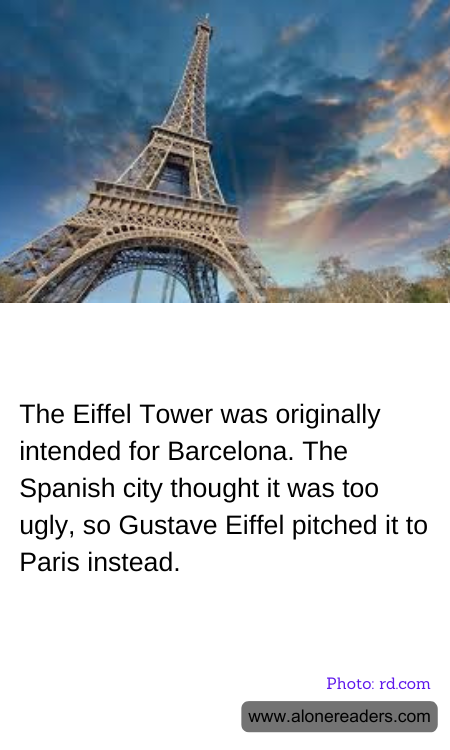
The Eiffel Tower, one of the most recognizable landmarks in the world, was originally proposed to grace the skyline of Barcelona, Spain, not Paris, France. This architectural icon was designed by the French engineer Gustave Eiffel, primarily known later for his eponymously named tower. However, before it became the centerpiece of Paris, the design for the Eiffel Tower was submitted as part of Barcelona's planning for the 1888 Universal Exposition. The objective was to create a standout structure that would draw visitors and international attention to the event.
Unfortunately for Eiffel, his design did not receive the reception he had hoped for in Barcelona. The local authorities and public deemed the structure to be too modern and unusual, with some even calling it an eyesore. At that time, the aesthetic norms favored more traditional or neo-gothic designs, and Eiffel's innovative iron lattice tower did not fit this preference. Consequently, the project was rejected, deemed too radical and odd-looking to be a fitting symbol for the city.
Undeterred, Eiffel presented his design to the planners of the 1889 Exposition Universelle in Paris, a world's fair organized to commemorate the centennial of the French Revolution. This time, the design was met with approval, as Paris was looking for a monument that would symbolize modernity and innovation. The construction of the Eiffel Tower began in January 1887 and took just over two years, culminating in March 1889. Upon completion, the tower stood at an impressive height of 300 meters (984 feet), making it the tallest man-made structure at the time.
The initial reception of the Eiffel Tower in Paris was mixed, with some critics voicing similar concerns to those in Barcelona about its aesthetic qualities. Despite early criticism, the structure quickly became a beloved emblem of the city, drawing millions of visitors from around the world. It showcased the possibilities of iron as a building material, which was relatively new at the time, and symbolized the spirit of a new, innovative era.
The Eiffel Tower's journey from a rejected project in Barcelona to a celebrated Parisian monument is a fascinating tale of resilience and vision. It serves as a testament to how cultural tastes and architectural acceptance can vary significantly between different contexts and periods. Today, few can imagine Paris without its iconic tower, a towering tribute to the ingenuity and persistence of Gustave Eiffel. Meanwhile, Barcelona has found other ways to celebrate its architectural and artistic distinctiveness, most famously through the works of Antoni Gaudí and other modernists. Thus, both cities have thrived with their unique contributions to the world of architecture and culture.
